Communication

Brilliant letter this morning from a Mr Dave McGovern (airline pilot) who moaned about an article bemoaning radio-telephony language.  He signed off:

Bravo Yankee Echo Foxtrot Oscar Romeo November Oscar Whiskey (BYE FOR NOW – just in case you didn’t get it!)

(Ideas are all around us…)

(But did you see he managed to get Foxtrot Oscar in the sentence – which is not a very nice set of initials and a bit of a put down – on purpose, I believe?)

This made me think of about three things at once (Yes, it’s yet another one of those what I learnt today moments, if you look about you there are ideas and lessons everywhere!)

  1. There is always a chance that when you talk in techno speak or in acronyms, some of your listeners may not know what you are on about – always take care to check
  2. Humour helps to sell ideas – to adults especially
  3. A bit of pride in what you do or your organisation (as this writer certainly had) goes a long way to giving you believability and credibility
  4. Always think of your method and route of communication – is it appropriate for what you are trying to achieve?  I’m guessing Dave McGovern doesn’t speak like this when he is down in the pub?
  5. (and if he did do, I hope his friends would give him feedback on how annoying it was – depending on how they handled conflict!)
  6. As an outsider, it is easy to assume you know as much as an expert insider (like the article writer who annoyed Dave).  Always beware of expressing opinion as fact – people get annoyed if you keep doing it.

OK – that’s more than 3, but I got carried away.  Look for ideas yourself – and put me out of business!
Cattle Market Visit

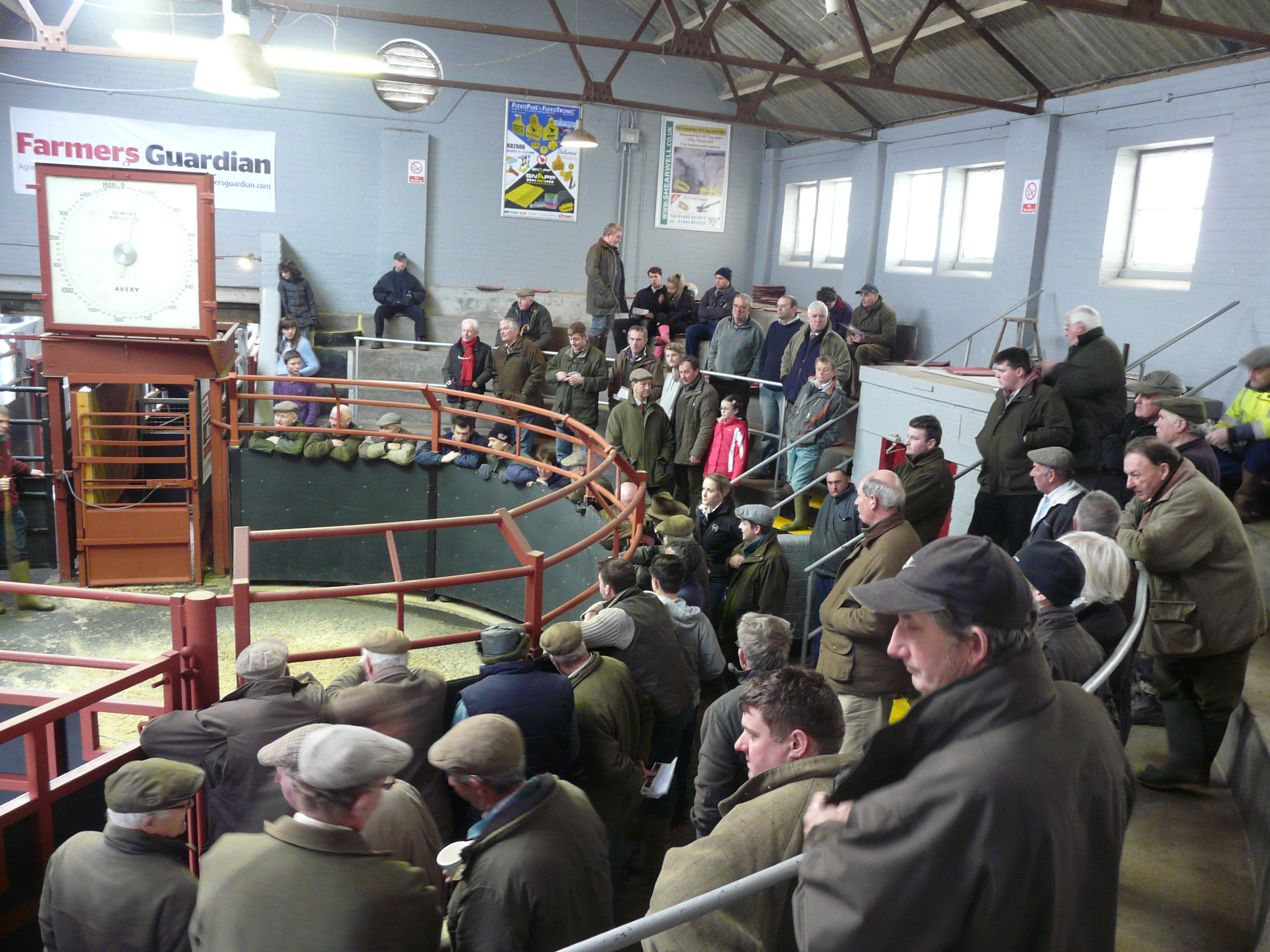
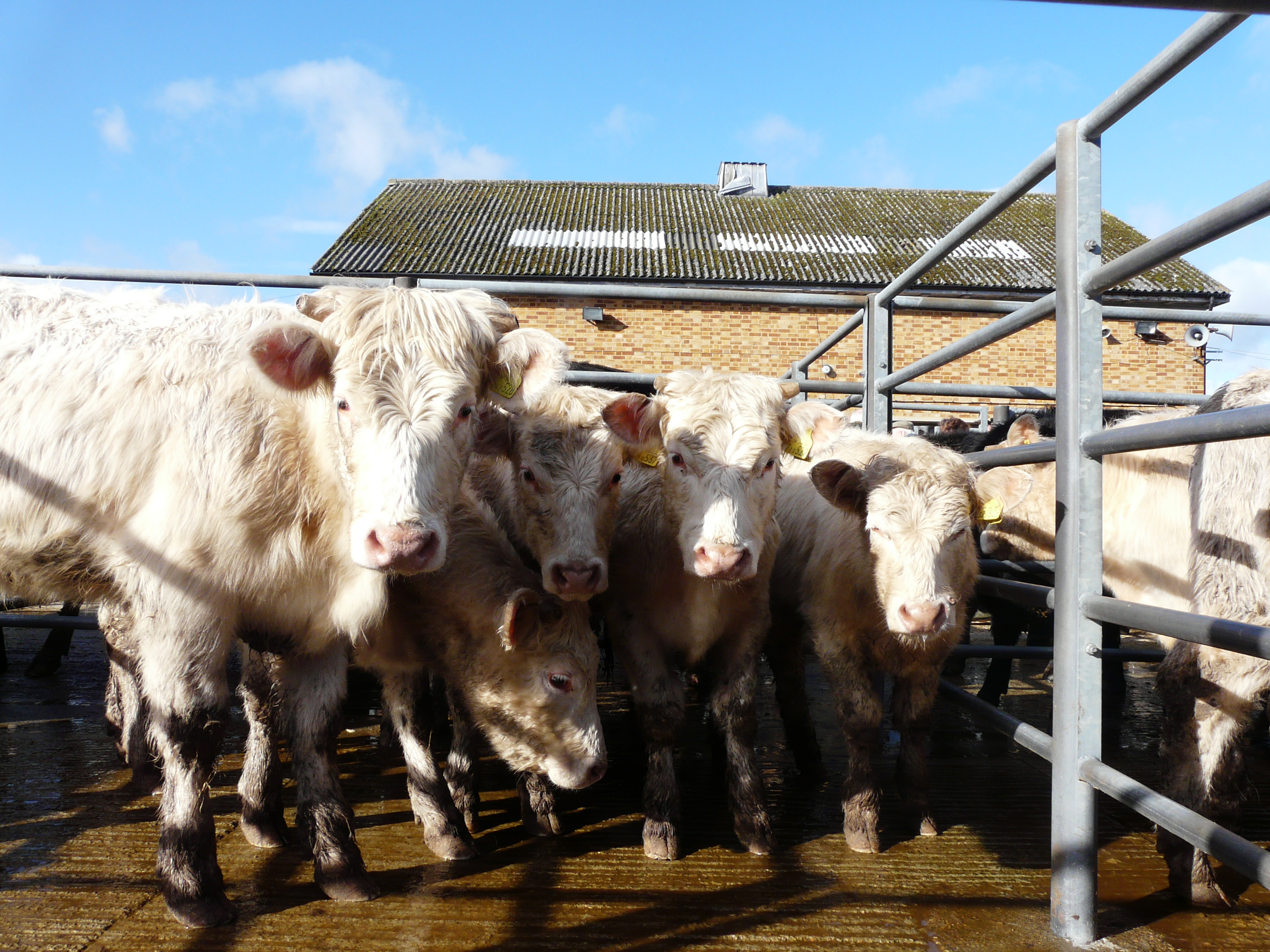
“It’s like a cattle market here”.  never a truer word spoken!  I visited one of my local markets today (I have been doing some work with them), and, as I’ve said before, you don’t have to look or think hard to find lessons everywhere – every day is indeed a school-day!

"Ready and waiting!"

“Ready and waiting!”

WILT – what I learnt today –

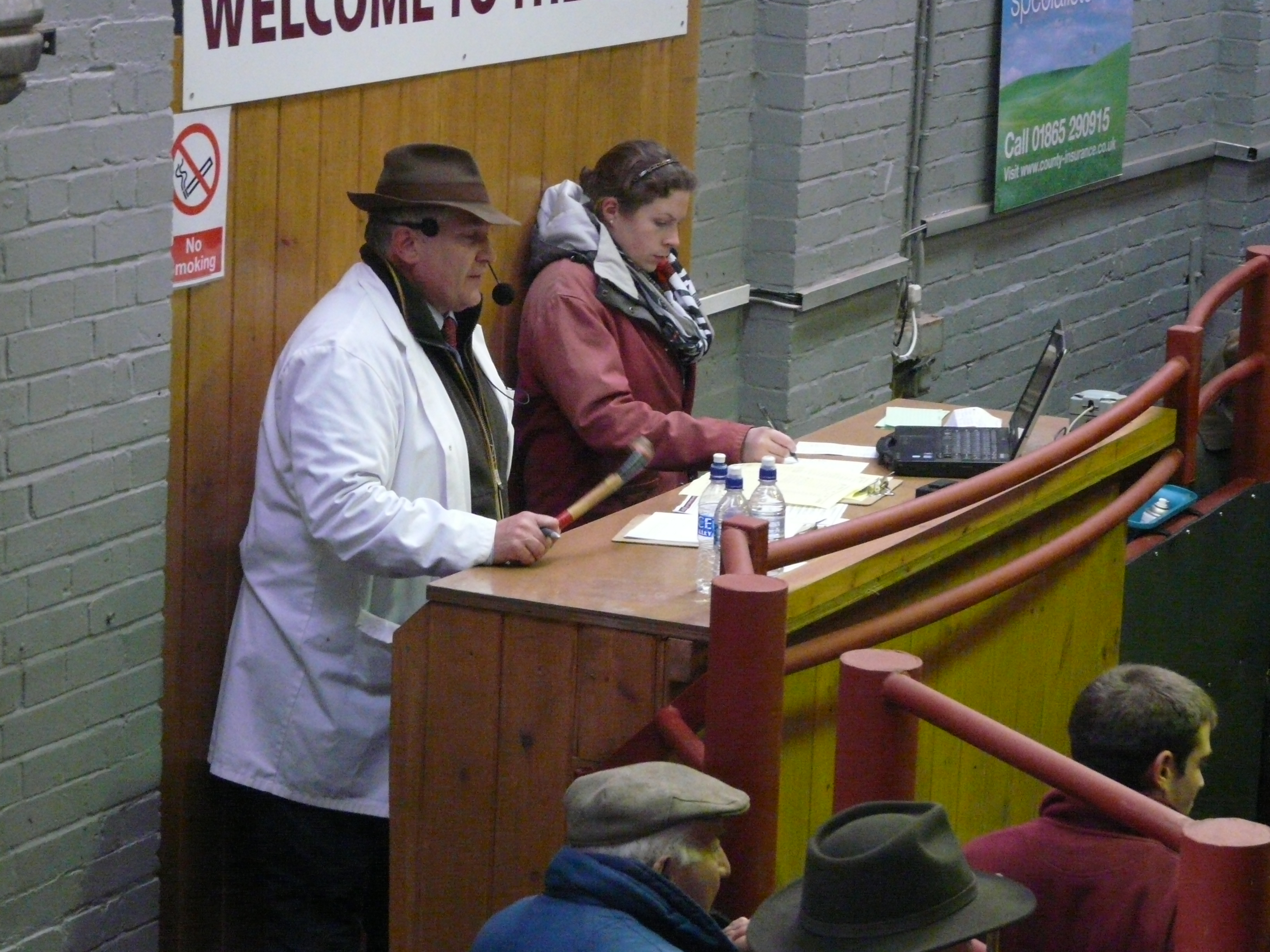
  1. Auctioneers really do speak that fast and that incomprehensibly to us folk who are not tuned in.  Those in the know – all knew what was going on
  2. It’s a real team effort to make sure there are no snags or disasters.  If everything runs smoothly, nobody notices
  3. ‘Buying and selling stock’ – that is what you would say was the main business?  As ever, it is the people who make the business, not what it does.  From stock men to back office checkers, to auctioneer to the farmers – everyone plays their part – and it wouldn’t work without everyone knowing their job and knowing that everyone else knows their place in the jigsaw
  4. A lot of being on the farm must be fairly lonely – these sorts of gatherings give people their human fix.  The networking was quite astonishing
  5. Everything happened so quickly – as a newbie, I didn’t quite know what was going on, so it seemed even faster…
  6. When the auctioneer took me around the place before the sale started – I couldn’t help but be impressed by his deep knowledge of all the people there – “Are they like I described them on the phone?” “Yes – thanks”. Then an aside – “They are down from Cheshire – and I know which lot for, so that will sell well…”
  7. I felt welcomed, not intruding.  And the bacon bap (and tea) were definitely up to scratch.  (I am making a sensible assumption that the bacon was not Danish?!)
  8. There was an awful lot of banter and playfulness – it does seem to help.

So we have, communicate at the right level for your audience; look after and include new people; knowledge and networking help to oil the wheels of commerce; people need people; people make organisations flourish.  And finally – having fun makes the world, and the world of work, go around.

(And someone did bid on a lot whom I was sitting next to – I really did not breathe or blink for 2 minutes!  Anyone know what I can do with two store lambs?) (Joke…)

(Thanks for looking after me, Simon and the team.)

P1050865 P1050869


NHS: The Front-line?

So, we have had the government response to The Francis Report on Mid Staffs. Of all 179 recommendations, only 1 seems to have become the most contentious arena – legally binding safe staffing levels. The money people and apologists keep saying that setting a minimum would fast become the maximum norm. We all know that Intensive Care is likely to need higher nurse to patient ratios. 1:1 is not an uncommon need level. We also know that once something as big as the NHS starts measuring stuff, we get two problems:

  1. We measure what’s easy to measure and fit the figures to make sure no one asks questions
  2. We do things for the figures, not what is in the best interests of the patient

Fiddling, and fiddling whilst Rome burns will be the repeated norm.

Do we have anything to make us feel like things might change? I’m getting heartily fed up with the only answer being yet another enquiry.  Most people I work with in the NHS are totally committed and professionally focused on just doing the best they can.

Nurses, Midwives and Care staff bosses have come up with a plan for compassionate Care.  6 C’s are the headlines, and here they are.

Care

Compassion

Competence

Communication

Courage

Commitment

I’m just a bit surprised this isn’t just day to day in these professions.

We just need t stop interfering. Let local real managers manage.  And let them do what they do best – and get rid of those who can’t – be they the uncaring uncommunicative nurse, or the manager who can’t.

Have a great (and safe) weekend.

More “What I Learnt Yesterday” (WILY)

WILY – great name for a twitter account, I think!  (Yes, I do tweet too…)

Carrying on the theme from my tangential thoughts after Kevin Pietersen story broke – it just shows how much you can take as lessons for organisational life from daily news.  Just think a bit…

  1. “Pietersen calls shots as lucrative offers come in”. (PR department?  Handling bad news well?  Social Media power?
  2. “Railway to nowhere – storms destroy key route” (Long-term planning, short-term fixing…management versus strategic leadership?)
  3. “Laws: Give Ofsted power to inspect Tory flagship academies” (What gets measured gets done?  Do we have the right performance indicators?  Are we just checking what is easy to measure?)
  4. “NHS faces unprecedented squeeze, warns IFS” (Budgeting in constrained times?  Living within an imposed environment – not worth worrying about what we can’t do – let’s be creative about what we can influence?)
  5. “Obesity leads to trebling of insulin use in last 20 years” (Can we do anything to help increase the healthiness of our whole staff?  Stress management workshops?
  6. “Tube Strike chaos” (When two tribes go to war – do we have factions like Boris and Bob?  Are they being destructive?  Communication issues? Dispute resolution skills needed?)
  7. Winter Olympics begins…(Discrimination?  Homophobia?  Group-think? Security?)

(from my friends at Glasstap / Trainers Library)

Look – I’m only on page 10 of my newspaper (The i, since you ask), and I have been very extensively thought provoked!

Wednesday’s blog caused one reader (Nick – thanks!) to send me this story – again, very instructive:

“Your insightful article reminded me of an experience from which I can draw comparison. A couple of years ago, I had working for me, probably the most talented engineer I have ever come across. Absolutely brilliant with a super quick and efficient methodology in a variety of disciplines. Tragically his talents did not incorporate any ability whatsoever to work and get along with his, technically lesser but collaboratively superior, fellow employees. In hindsight I tried too hard and for too long to keep this guy but eventually for the good of the ‘team’ the brilliant maverick had to go…….”

My thoughts?  Learn from those sorts of thing – and grasp the nettle earlier!

Have a great weekend.


Sports learning Kevin Pietersen

Lots of comment and lots of thoughts sprung to mind when I first heard the news that Cricket test all rounder Kevin Pietersen had been ‘sacked’ by the management.

It went further than that, though. The rumours have abounded all day that the rest of the team were asked to vote if they would want him to stay or not – and no-one voted to keep him. Now, this may not be true, but think – are there any members of your teams who might fall into that category?  Or any individuals in the team you are a member of?  Or even, yourself?  News always makes you think, doesn’t it?  Even if you don’t like cricket, just watch the news tonight or get some on-line stuff – you will be amazed at how divisive a figure this ‘talented maverick’ seems to be.

“He just needed to be managed well” , said his first test captain, Michael Vaughan.  You have to be able to manage , mavericks – you can’t have clones all round”.  Hmm.  Got you thinking again?

He had been criticized for repeatedly failing to reckless shot-making.  So, not a team player?  Annoyed the others?  Not worth keeping however great he was on occasions?  Are some people more trouble than they are worth?  Or do they just need better management and leadership?

Do you see what I mean?  Read and watch his story with your organisational hat on, and  yo will be amazed how much learning is deeply embedded in there!

This sort f thing (although this is easier to pick over than some stories) does happen every day (Tube strike yesterday; NHS A&E problems, Boris – any day, really).  Just look at stuff from a different angle.  You will be pleased at this cheap way of enhancing your thinking.  WILT – what i learnt today – will become very easy for you – and you may want to put up a guest blog here!

WILT and WILY

Just in case you think you may have stumbled upon a naughty site – hold hard!  These are a couple of twitter feeds I publish – #WILT and #WILY – are What I learnt today and What I learnt yesterday.  Everyday is a school-day, as my friend and colleague Wendy Smith says – and she is right.  Ideas and learning is all around us.

Reflecting on reflection - The Lakes at their best

Reflecting on reflection – The Lakes at their best

1. This morning, we had a bit of flooding around and about.  Mostly people were immensely courteous.  Flashing you of upcoming danger (fallen tress – full across the road water lying there etc) – and t really helped to keep us safe.  Coming back on the Henley to Marlow road – we were traversing a foot deep of water, about 50 metres long – and the safest place to do this is straddling the centre line – right – on top of the brow of the road.  We were all doing that – alternate passing, first east to west then vice versa.  Until we started off and an anagram of Newark (start with W) in a Land Rover came ploughing through at 30 + mph – and we had to all drive out of his way.  I do hope he has an awful Christmas, and can get some special treatment for his very small nether regions.  It is probably only the size of his brain.  It costs nothing to be polite my mum always said (RIP mum).

2. Delegation prevents stress.  We are sharing Christmas food.  Our house for the main bit.  Then instead of falling asleep – onto puddings, cheese and port to our other family guests house.  It feels wonderfully civilised.  Now, could we do that more at work?

3. Enjoy the fact that most of us who are on call 24/7 (lap top, office, mobile and tablet) will have very little e-mail traffic for the next ten days.  Chill.  It is needed.

4. And give thanks for all those who keep the country running – health workers, Salvation Army, those helping the homeless, our religious leaders, the shop workers and even the sportspeople – thanks team – we do appreciate it

Nelson Mandela

I run a lot of Leadership courses.  We often start with a round table discussion on ‘leaders you admire’  Whether you do just leaders (when we get a mixture of politicians, present and past, plus a smattering of media savvy business people), or if you ask for ‘idols – people you admire’ – Nelson Mandela would always be chosen by at least one of the participants.  And often, others would jump in saying ‘I had him too!’

File:Nelson Mandela-2008 (edit).jpg

Why?

Everything said last night and this morning could be cited.  One of the BBC’s Africa Service correspondents – Nomsa Maseko – was 10 when  Mandela was released.  Her story of seeing her mother in tears watching the TV, and she not understanding why – ‘are you ill?’ – mum shook her, and said ‘Nomsa, you will remember this day for the rest of your life.  You are now free’.  And seeing pictures of The Nobel Peace prize being presented to President Mandela and ex President FW de Klerk (The last white President – and possibly the bravest white man in South Africa at that time) – how can we not be inspired?

(And listen again to BBC Radio 4 “Today” on the iPlayer – 7.45 Bishop Tom Butler, and 8.55 – a round table including Nomsa – BBC at it’s absolute best)

Words like humility, emotional rapport, love in action, charming – all serve to show a normal person achieving abnormal things.

27 years incarcerated – and the regime trying to break both the prisoners and their supporters – but he emerged both with his mission intact, and with reconciliation in mind.  My wife said ‘it feels like his life was on hold for that time – and he was blessed with more years of very active life to make South Africa better’.  Yes, that’s how it felt.

We cannot all become like him.  But we can emulate some of the ideas and ideals.  Even if it is standing up to a bully at work, whistle blowing, smiling at each other, listening well, having conviction in your aims and having very strong core values – you are being a little bit Mandela.

What a legacy.  What a man.  May he rest in peace.


Positive Repeating?

“Better than best?  Things are going great – don’t rock the boat!  Just keep on…”

We’ve all had these sentiments at some stage – and it can be a dangerous place to be…

You know what to do when things go awry. That’s when you earn your money as a leader? Isn’t that what you are there for?

I agree – professional problem solving is a core management competence, for sure.  But consider this take from one of my clients.

“It’s really pleasing to see that we have done so well.  The only concern is that we cannot seem to identify the factors that have made it such a profitable year. It is important that we identify these factors to make sure that we keep doing the right thing in the future”


7668

(from my colleagues at The Trainers Library )

Anyone else blown away?  It always feels easier to sort things out if we have a problem! But the problem here is very real.  If you don’t know what made ‘it’ successful, then you are basically hoping for the same. Like non SMART objectives, you really are just wishing. “My objective is to improve communication across the organisation this year”. How? What actions will you take? What are you going to do differently?

See what I mean?

If you had a problem, say “we have lost 10% market share to one main competitor in the last 6 months”. What would you do?

  1. Analyse deeper (geography, product splits, customer feedback or whatever)
  2. Check if there are any places where you are achieving against trend
  3. Get appropriate team members together to create the fight back plan

(Ok you may have deeper methods – SWOT, PESTLE and creative problem solving techniques – but these are the general titles and aims?)

Why shouldn’t the ‘repeating good’ be very similar?

  1. Analyse
  2. Check for “against trend” examples
  3. Create plan with the right people using this data

ACC – a new acronym!  I have arrived!

And do you know what’s wrong with all this?  We will still bowl along into a complacent failure because if we don’t know why good has happened, we will smile our way into stagnation – and because it’s going well, we just never think to find out why.


“It’s the people, stupid”

We all know the politician’s favourite line (think it was Bill Clinton who said it most powerfully in recent times) – “It’s the economy, stupid”.  The mendacity of our democracies is that simple and horrid truth – the swing voters (the only ones with power to create change) swing most fervently on who they trust to handle the economy well.

IMG_8864blackwhite

(Stand out from the crowd – please everyone around you!)   – photo from my friends at Glasstap 

It is becoming more and more clear to me that a simple truth is absolutely core to all organisational success.  You can have the best widget, the most powerful and efficient systems, the most outlandishly modern equipment, suppliers, resources and customers who pay on time.  And it can all be laid completely to waste by the people

If you handle people badly – not listening, telling them what to do, not involving them, treating them as cost centres, giving them no space for input or development – then expect to fail.

Luckily, the converse is true.  Treat your colleagues and your team members like you would prefer to be treated yourself, and you will not go far wrong.

And a quick story for managers and directors.  A few years ago, a milk round delivery company asked their top performers what motivated them most.  They were about to go franchised, so wanted to use this criterion as a way of getting the right people on board.  After 2 hours, the top few said, “We cannot tell you what motivates us best – just what annoys us the most.  It is when senior management do not tackle those people who are not pulling their weight”.

Sometimes handling bad news well and tackling the thorny issues can be the most powerful thing you can do.  That’s why you get paid more.  Anyone can manage good news.  Good managers and leaders handle bad news well.

Peter Drucker on Management

I have a Daily Drucker – pithy comments for every day of the year — by my desk.  He was voted number 1 Guru’s Guru by the Harvard Business Review.  The introduction to the book (written by Jim Collins – co author of Built to Last) had a rejoinder to that.  As he was leaving, Professor Drucker said “I have learnt much from our conversation today”.  Jim suggested that Drucker didn’t see himself as a guru; he remained a student.  Amen to that.

It wasn’t today’s piece that inspired me – just a quote in my daily newspaper (The i ,as you have asked). Here it is:

“So much of what we call management consists in making it difficult for people to work”

This is a bit like watching “The Office”.  You don’t know whether to laugh or cry.  Or just wince in recognition.

But, whether you are a manager or a team member – you know what he means.  That is the power of a quote – like the one above.

So what did it make you think?  Here’s my list:

  • You can always learn from a bad manager.  When you become one, at least you already know what not to do.  Embrace the learning opportunity with a sly smile!
  • We see examples of this everyday.  From hearing of yet another scandal in a large organisation, to government interventions in areas it knows little about (e.g. the NHS in the UK), to large scale posturing (the current US stand off between the republicans and the president) – Drucker feels more right than wrong
  • Is it just that bad news sells, and we witness the results in our news?  May be so – but there is a lot of it about!
  • Does it make you want to look at your systems anew and think “if we were starting today, would we have all this in place?  Or would it be best to edit what we have, or even wipe the slate clean?”
  • Don’t just sit there and moan – invent your own future!