The shock of the new

Change is scary for lots of people in all organisations. It involves loss – of what has gone, of a bit of continuity and certainty, of familiarity.  If you look up change management on business websites you will quite often find reference to The Bereavement Curve, or something like it.  That is because change does feel like a major loss to most people.

There is a major problem in times of constraint, which makes this far more problematic in my view.  People may disguise their feelings, or bury them because of recessionary fears.  They, quite literally don’t want to put their heads above the parapet, for fear of being shot down or singled out for the next round of cost cutting.

Bad employers may exploit this.  Governments may do (public sector pay freezes, as a simple example).  This short termism may well come back to haunt the perpetrators.  Both in the ballot box and in an inability to recruit high quality people in the upturn. And rightly so, in my mind.


People do have two contracts, as you know.  Their contract of employment, and the Psychological contract.  The second is far more elusive and dictates what is usually called ‘discretionary behaviour’.  Simply, if people feel good about their organisation, then they may put more effort in.


One of the hardest things of all about any change though is we have to realise that we cannot change the past.  It really is no use bemoaning the passing of a process, system, client or colleague.  We can only learn from the past and change the future.

So the soft skill here?  It’s about supporting each other.  Listening, cajoling, imagining, creating new ways of doing and being.  And doing this as teams, as groups, as lunch flies, as friends.

We are all in it together if we choose to be.

(Picture is from my friends at The Trainers Library – always good!)

Trust

Don’t know if you caught a piece in the news yesterday – A vicar in Huddersfield, called Rev Richard Steel.  (Luckily not Steal!).  He had £450 – 45 people – who took the £10 each.  He asked them to go away and invest it – no names, no lists.  Parable of the Talents from the bible, one o three people didn’t invest it, and only returned it – so was consigned to the  outer darkness, and the weeping and gnashing of teeth.  Richard promised he wouldn’t do this.  His experiment will be seen to work if they return with more on Easter Sunday.  I look forward to hearing the result.

But how often would we have that sort of level of trust in our organisations?  It’s the same as delegating an important task or project to someone – and not interfering too much, isn’t it?  Would we get a lot more out of people if we did trust them more?

One of the problems with trust is it is very volatile – abuse it once and you may lose it forever.  I tend to be black and white on this – perhaps too extreme, really.  People (rather than leopards) can change their spots.  It may take you a long time to resurrect it if the loss of trust was your fault.  It’s like trying to roll up a ball of string, and dropping it.  It goes miles before you can stop it, but then you have to start reeling it back in.

It is worth the effort…

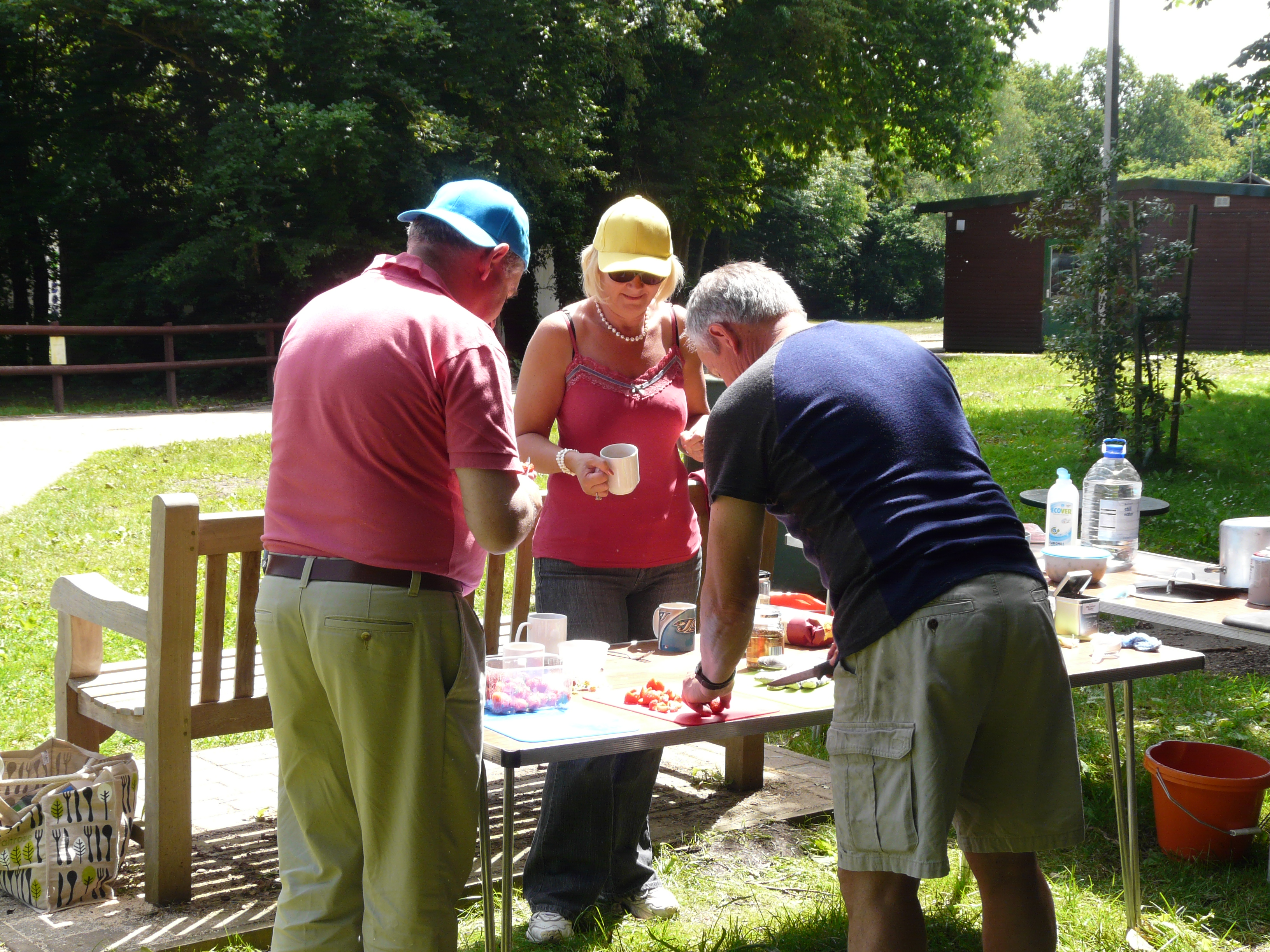
The audience (and showroom) trusted my cooking!

Banter or Bullying?

I have been running workshops in recent months all around getting the balance right between Banter and bullying – not letting everyday fun and frivolity spill over into something unwanted.  It has been fascinating.

Yes, on every workshop you may have the occasional person who doesn’t want to know.  But most people started thinking “Do we really need this?”  They all ended by feeling we did – and the biggest problem is it is so difficult to define.  One persons jokiness is another persons vicious verbal assault.

Blood on the carpet? (From my friends at www.glasstap.com)

It’s a bit like sarcasm – and those of us who are big proponents of the skill will always use the excuse that although sarcasm is the lowest form of wit, it is the highest form of intelligence.  But we sometimes fail to recognise the hurt it may cause.

As I said on most of the sessions, the only way to prevent any form of potential annoyance is to keep dead silence in the workplace.  But that could drive us all mad, and would not entice people to come to work!  Banter and humour are the lubrication of everyday life at work.

The problem is that the whole area is grey and amorphous.  The main message was it didn’t really matter what you were meaning as the speaker – if it was perceived as going too far by the recipient, then that needed to be fixed.

That led us to the things we needed to do to make sure any problems were nipped in the bud.  Better communication was the catch-all.  Within that, really simple ideas like apologising, actually saying sorry as quickly and sincerely as possible, was probably as good a starting point as any.  Simple soft skills are often the best ideas of all.

Appearing on MarlowFM

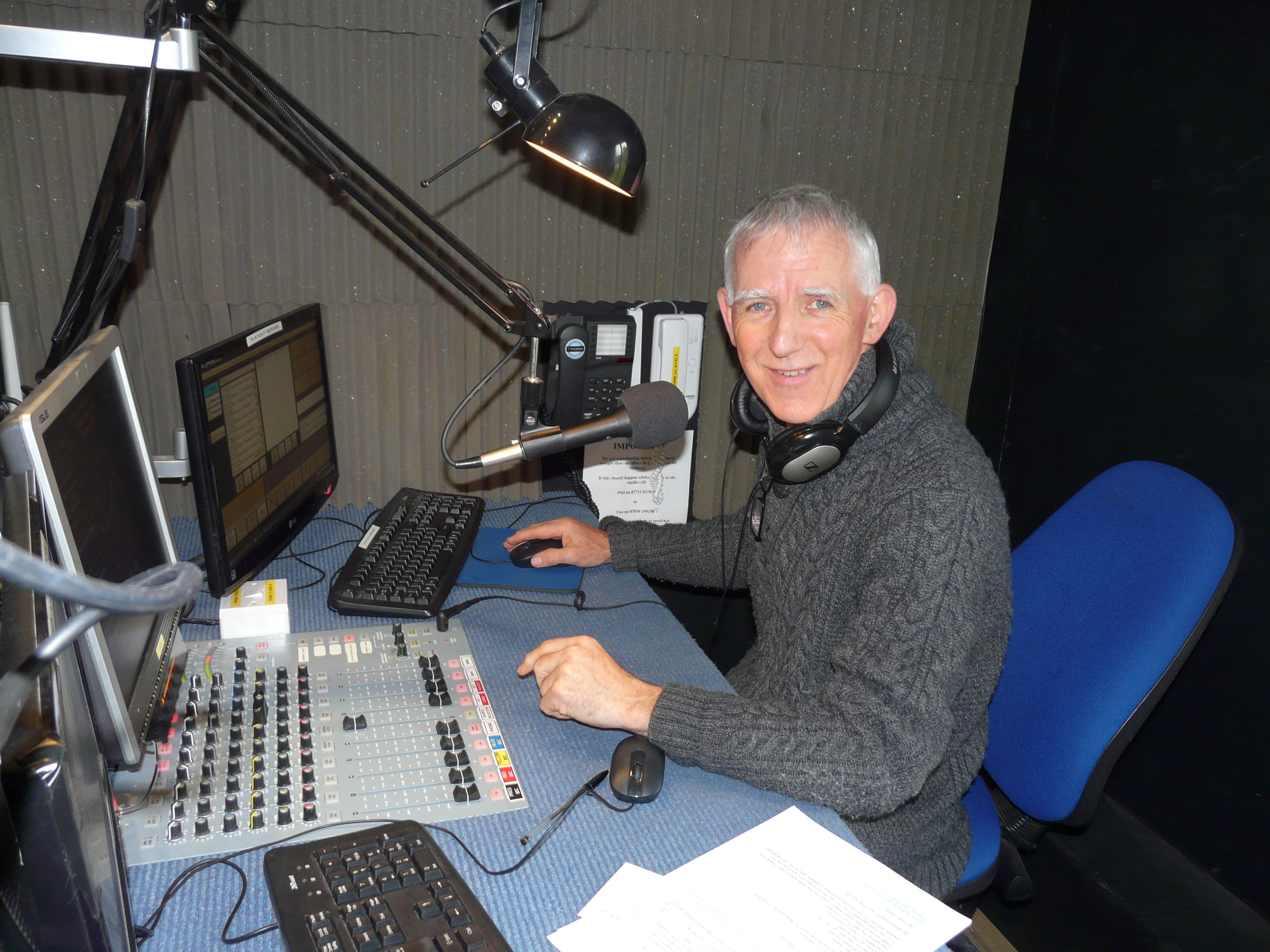
My good friend Dermot Fitzpatrick had me as a guest on his Biz Buzz show this afternoon on our local community radio.  It was a hoot!  90 minutes of your life just disappears in a flash…and as soon as it’s over, we are out of there and locking the door behind us.

Dermot at the desk!

Dermot made it very easy, by asking all the right open questions (we had met up before hand, of course).  The hardest question was really around soft skills.  “Can you define them?” Says Dermot.  It’s actually easier to define what they are not – they are not the hard skills of analysis, data handling, strategy  negotiation or whatever.  They are much more to do with people – hence it feels a bit fluffy!  It’s all a bit group hug if you let it be.  But we wanted to make the case for it.  I mentioned a recent CIPD piece of research on making the business case for soft skills.  And one of their conclusions was that the hard skills can only work well backed with the soft skills.

I also decided one of the underpinning skills of all soft skills was listening – and active listening at that.  Actually being there in the moment with the person talking, and not thinking what you are going to say next, or taking a sneaky peaky at your watch!  I said your brain can work fast enough when the other person stops – just don’t worry.  So maybe this weeks top soft skill is listening…and isn’t that appropriate as we were on radio?

We talked about emotional involvement, and why is work different from our life outside   I don’t really understand the phrase ‘work life balance’.  I do understand the problem of presenteeism and people who are workaholics.  But if you are in a job that you can feel some involvement and some passion for – it really doesn’t feel like working.

And that’s as it ended – I talked about my Dad (Ray), and how his influence had made me so positive about actually being able to do things.  And about making sure you tell people you like what they do, or even love what they do.  Why not?  Why can’t we bring some real life into work?  Try it!

Dermot played out with Mike and The Mechanics ‘Living Years’. He did this in memory of my dad.  Listen to it again – and think how to apply that in all your life, work and play.

The scary light…

Motivating employees

Just picked this up from Chartered Management Institute:

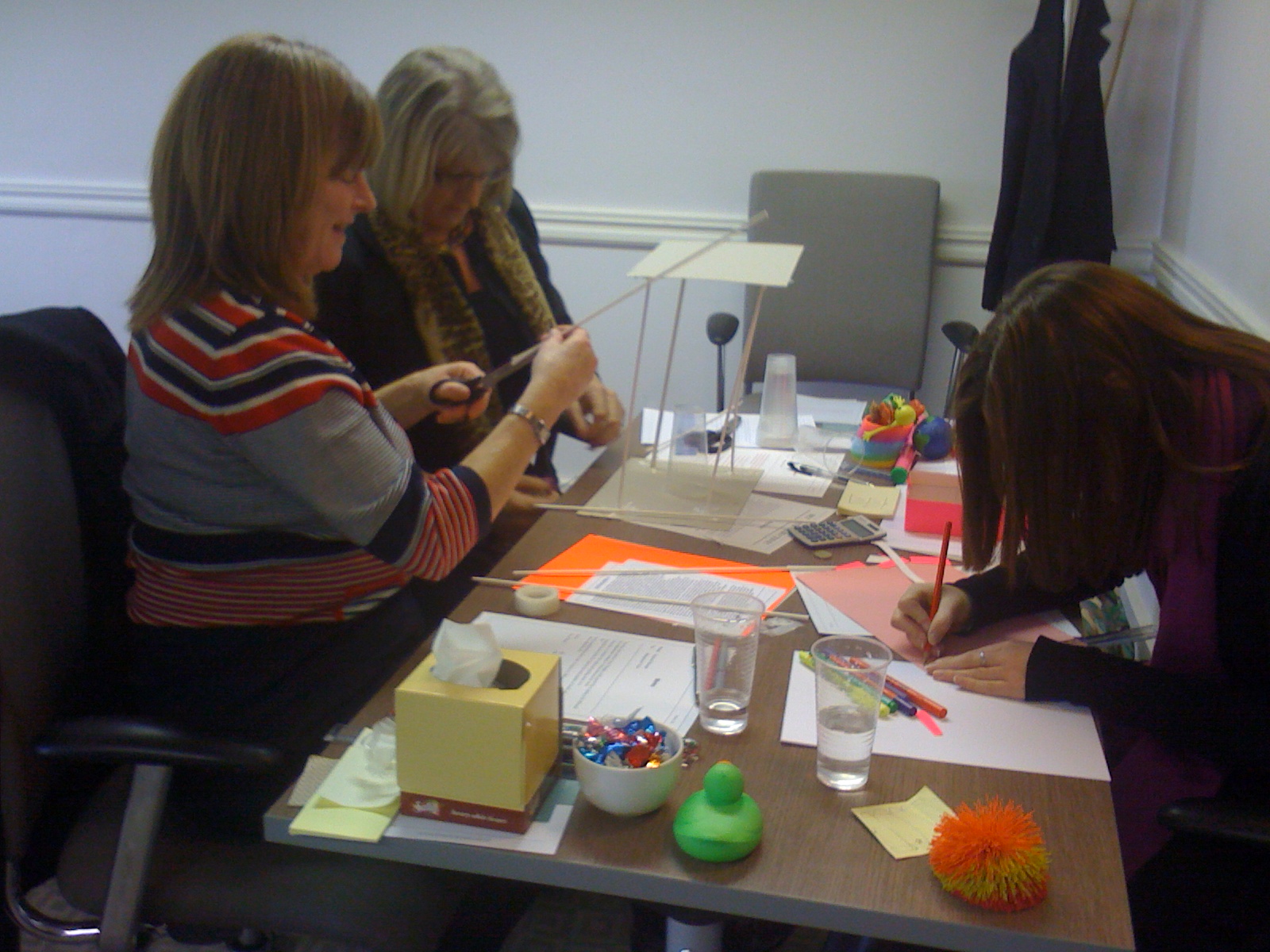
A team happily working together – at a team building day!

“Being able to motivate staff is one of the key management skills anyone who has recently been promoted must learn.

This is according to Andy Yates, an advisor and mentor for Huddlebuy.co.uk, a money saving site for small businesses.

He says that ensuring your employees are happy is one of the key steps in ensuring your business remains productive.

Indeed, as most of us spend the majority of our lives at work, ensuring that it is as enjoyable as possible is of the utmost importance.

Mr Yates believes one of the easiest ways to keep staff happy and motivated is to praise their work.

He told the Daily Mail: “Praise is a no-brainer for any boss. It costs nothing, it’s easy to give and it means a lot. So why have so many bosses not got the brains to praise their employees more often when they achieve and improve?”

He added that communicating company visions and values and getting the employees to buy into them is also key for any business.”

I like the sentiment, and the ideas of how to are not extensive, and not really rocket science.  The bit that gets in the way, as far as I am concerned, is usually our own experience (or lack of it) in receiving praise ourselves.  We start by thinking “Do they mean me?”, then maybe cynically think “What do they want?” or end up simpering “It was nothing really”.  So try it.  As the One Minute Manager said many years ago “Catch people doing something right – and tell them so”.

The Vision and Values thing is perhaps a little more difficult.  To treat this aspect of the business as if it was owned and forged in the senior management team is to miss an obvious trick, and to make an obvious problem for yourselves.  If the rest of the team aren’t involved in creating these commandments, it will be much harder to engage them in living them and making them happen.  The top team do not have a monopoly on good ideas.

Share, and get people involved.  And remember, praise people when they come up with great suggestions!


The hardest of soft skills?

I’m on a hiding to nothing here, aren’t I?  To be honest, I will probably return many times to this theme – because the hardest of soft skills will depend on both the people involved and the circumstance.  It will all be about context.  But I don’t care and am going to go for it!

Trust.

It’s hard to define, except in it’s absence.  And you can’t put a finger on it. It’s easier to say what it isn’t, and say when it’s gone wrong.

The problem is, it takes time and effort to develop.  And it is so volatile – it has a very low boiling point.  Once it is breached, it takes a lot of fixing.  And some people take longer to heal than others.  It seems to me like  a ball of string you have laboriously been winding back into a ball.  If trust is lost, it is like dropping the ball of string.  It goes on and on and rolls away from you so easily.  The only thing to do is to stop it unravelling as quickly as you can, then start the slow process of winding it back into a trusty ball shape.

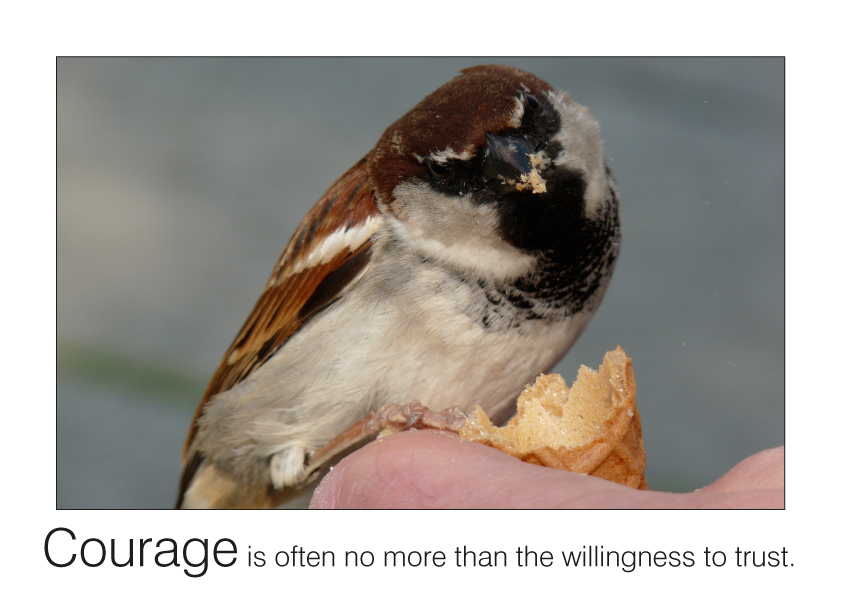
I tend to agree with the lovely caption below.  It does take courage – lots of it.  But I also have to say I don’t give people too many chances.  Once I have lost trust it is hard to win me back.

is that why I think it is the hardest of the soft skills?

An image from my friends at www.trainerslibrary.com

Soft skills – a new bandwagon?

I have just received a research report (Thanks Sarah!) from the CIPD (Chartered Institute for Personnel and Development).  It is entitled “Head and Heart Guide – a business case for soft skills”.  And then, in a leader column in the Saturday Times, we have a discussion on Andrew Mitchell, the new Tory Whip who has been accused of verbally abusing a policeman outside Downing Street.  They talked about courtesy being an essential component of leadership.  And they quote anonymous (the most prolific of all writers) who said “Never hire the guy who is rude to the waiter.”  And Edmund Burke, who said “Rudeness is the weak man’s imitation of strength”.

Interesting stuff, to say the least.  Lets just stick to this one component of the soft skill set.  One of my old bosses had a phrase about waiter rudeness.  “There goes one of those little big men, showing off by complaining”.  Not little in stature – just small in mind.  And it does seem to be men in the main who have this propensity.  Maybe we should just call that ‘maleness’.  It is probably more about the masculine and feminine sides of nature, not men and women?

When I was a National Sales Manager, we used to have reception check out the candidates.  Did they speak with them, or down at them?  Were they polite, or rude?  Did they try to engage them?  How was their smile?  This was a remarkably

Working politely in a team

easy way of adding real evidence for future successful sales people.  It was the people skill set that is hard to fully elucidate in the best behaviour setting of the interview itself. Simple, quick and useful.

One of my mum’s favourite expressions was “It costs nothing to be polite”.  It obviously costs a lot if you are impolite.

I’m glad to see soft skills are racing up the agenda!


Olympic bandwagon

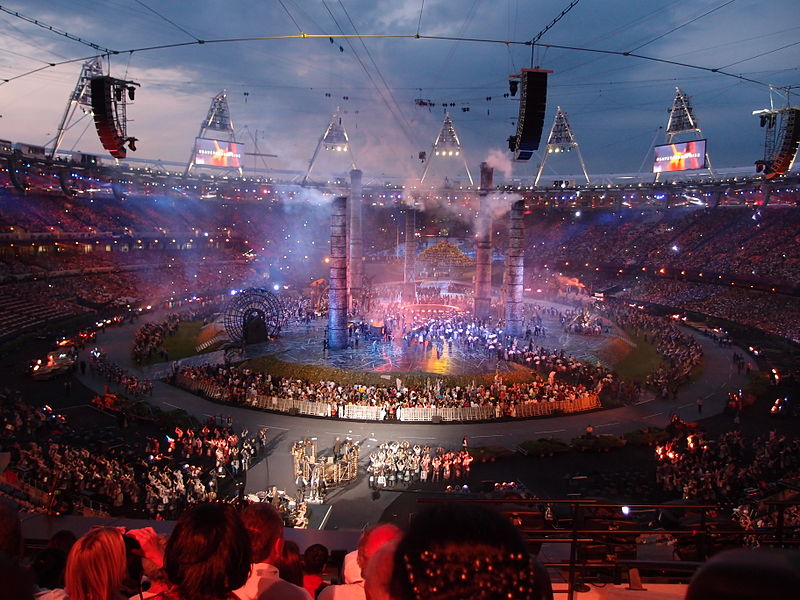
The Olympics Opening Ceremony

The Olympic Stadium

I’m sorry – I can’t resist.  I’m still aching from the ending of the games!  I had to watch the Great North Run on Sunday just to keep the fix going.

The Paralympics closing ceremony summed up a huge amount of the positivity that abounded through the summer.  And if positivity isn’t one of those elusive soft-skills that are hard to keep up, I don’t know what is!

Oscar Pistorius – “Heroes give people hope”.  Yes, and we all have them – maybe a teacher, maybe a parent, maybe even a boss (it is possible!).

“The Games-makers stand among the heroes of these games”  Yes – in both closing ceremonies, the loudest cheer and unadulterated standing ovations were reserved for ‘the volunteers’.  But games-makers is such a fantastic description of what they did.  It’s that simple change to a positive descriptor, not a straight fact of volunteering  – it just makes all the difference.  And how did they train them?  Well, a bit of basics and then a simple exhortation:  “Just go and be yourselves”.

And Seb Coe (one of two Tories to be cheered…) – “We will never think of sport the same way and never think of disability the same way again”.

“It has lifted the cloud of limitation”

Made in Britain.  How proud does that make you?  And how much of this legacy of positivity from the Olympic Spirit can we keep in our head, hearts and our work?

Soft Skills?

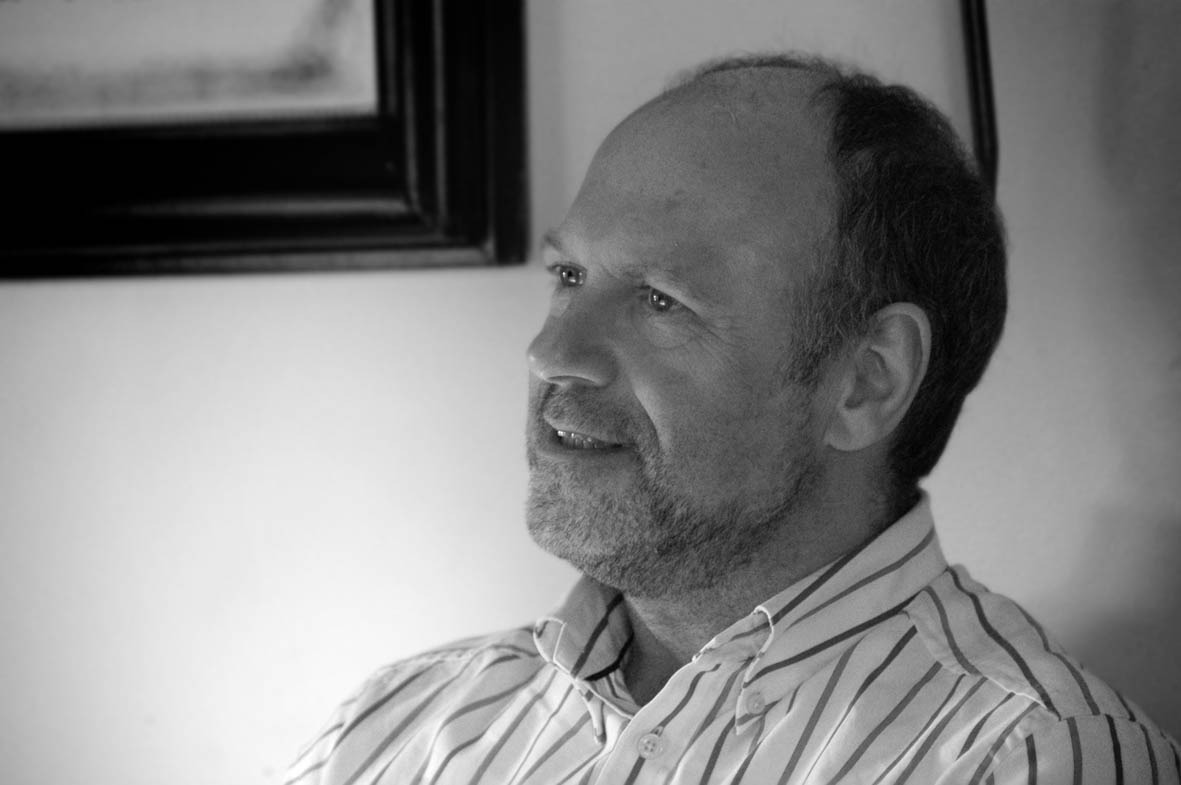
Phil in thought

I detest the phrase ‘Soft Skills’.  I just know that people like it, and everyone sorts of knows it means ‘people skills’. So I have used it in my blog here – and in the book to come!  But, it appears to have been designed by IT consultants to downgrade all the other skills of management and indeed all other organisational competencies into an oxymoronic second tier box.  Hard and Skills do sound like they go together.  Soft goes with fluffy, inconsequential, ambiguous and lightweight far more easily than with skills.  It seems likely that the consultants and old fashioned, macho, over-assertive ‘leaders’ (their word, not mine), were responsible for the spread of this nomenclature.  They can keep their Hard Skills description.  I want a new phrase to replace ‘soft skills’.

Where do we start?  I began with debate amongst friends and colleagues.  This blog is stage two, and should promote debate.  And I would like to canvass your comments and views.  Stage three is to be included in new phrases entered into the Oxford English Dictionary.  And stage four will be to have the consultants enthusiastically agreeing with me, and using the new phrase themselves in a positive, rather than pejorative sense.

We had a lot of agreement quickly that a new word was needed.  All bar one of the debaters thought that.  One was also concerned about the word ‘skills’:  “What we do is so much more than that.  It’s about changing beliefs and attitudes, challenging values and assumptions, and imparting knowledge”.  There speaks a coach and facilitator.  And I am not going to get embroiled in a tautological argument about coaching and mentoring at this stage.

People have tried this before.  Core leadership skills had a brief airing in 2006.  I agree that the skills we assume to be in the soft skills arena are key to making sure the hard skills are worthwhile having.  ‘People skills’ is a common second line added straight after saying soft skills.  My colleagues often say this to make sure the listener doesn’t make the ‘soft skills means second grade’ link.  Which again would indicate we need something new.

The Association of Project Management splits project management competence areas into Technical and Contextual, to cover the hard side of the equation, and Behavioural for the soft side.  Perhaps we do need another phrase for hard skills to join the suggestions to replace soft, – or it will forever hold the upper hand?

An HR director of one of my colleagues sums up the debate by incorporating the two phrases:  “Soft skills are the hardest ones to develop”.

So what do we put in this box?  The people skills of empathy, sympathy, listening, coaching, cajoling, influencing, supporting.  Do hard skills fall into the box of training courses that can be named?  So, Time Management, Negotiation, Making the most of Software, Finance for Non-Financial Managers would all default into the hard box?  Worrying isn’t it?  I can already feel grey areas.  Where would you put assertiveness training?  Maybe, like leadership and management, you cannot be so prescriptive.  It depends on the context, where you sit in the organisation and whom you are with at the time.

It perhaps comes down to the ‘soft skills are the hardest’ comment.  I would rather make the word bring to mind positive intent.  All the hard, technical skills are pretty useless without the soft people skills helping to put them into action -to help to implement all the talking and planning.  So we could have Implementing Skills.  Or, my favoured suggestion, “Enabling Skills”.  The Concise Oxford Dictionary helps here: “To make possible, to give (a person etc) the means or authority to do something”.  It goes on to specify a computing link:  “To make a device operational; to switch on”.

It is even better than I thought – as long as we soft people don’t then get our own back on our hard skills protagonists for their years of derisive comments by starting to use the phrase, and describing people as ‘excellent enablers’.  We know what happens when a new phrase gains currency.  The opposite tends to become the favoured description for the old phrase.  Do you think our Hard Skills colleagues would like to be known as those practising disabling skills?

Enabling Skills?  What do you think?  It has the virtue of being a positive phrase. It makes you feel that using these skills might lead to something happening.  And it will at least stop you having to spend five minutes explaining what you mean by ‘soft skills’, when your listener’s eyes start to glaze over.  Any other suggestions?


(A version of this appeared in Training Journal 18 months ago – nothing has changed since!)
Why Soft Skills for Hard Times?

I am writing the book of the same title.  Hence, Blogging in the same title.  it sort of helps to get thoughts in order and to keep it lively!

Everyone I have talked to about this  thinks at least the title is good.  I’m guessing the hard times of double dips and low growth could be with us for some time.

Inherently, I am an optimist. I think one of the best ways out of difficulty is positivity.  Systems and processes and equipment and buildings can’t be optimistic.  We are going to have to depend on the wet-ware (as the IT people call humans – not software or hardware, but wet ware because we are 70% water!).  The soft bits.  The people.  The lifeblood of organisations.  The thing that can make the biggest difference in both a positive and negative sense.

Yes, we all need to be led well, managed, cajoled, hugged, feel that we belong, smile, and get sensibly rewarded for our effort.

We al need to maximise our soft skills to make the most of our day to day work involvement.  Or outside work involvement.

Soft skills are hard.  And I don’t even like the words, really.  That was blog spot number 1 – have a look now

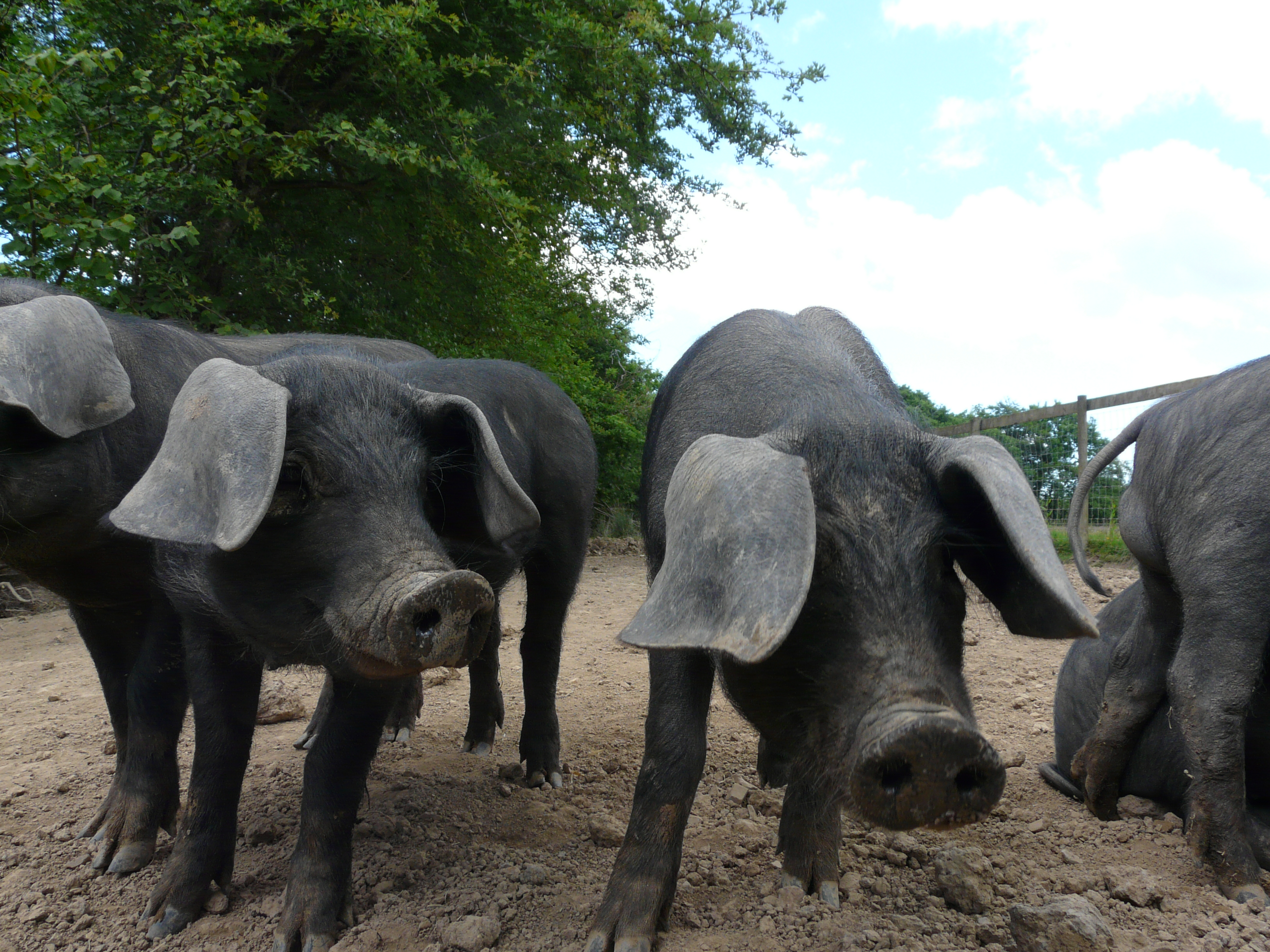
In case you feel low now – pigs always make me smile – hope they do you