Funeral for a friend

I am going to a friends funeral tomorrow.  She was a bit special.  I only know her through working closely with her during her rise through one of my client companies.  I counted her as a friend and colleague.

She died just before Easter.  She was diagnosed only two weeks before, but that’s how aggressive some cancers are.  I’d only met up with her to design the content of a course during the snow two Monday’s past.  I’d had an email exchange when she didn’t turn up to a workshop.  I said to get well soon, and I’d missed her input on the session.  She replied that she had some bad news

Sorry to say, I panicked and tried to find out what was going on.  The grapevine said it was indeed bad.  We had no idea it would happen so fast.

What do I remember Pat for?  Hard work, frightening honesty and integrity, and fun.  She was proper northern.  A lass from the north east.  Absolutely hated those who over egged their northern roots.  “That one – she keeps saying Hinny an stuff – she’s not even from there!”  Pretty typical.  No side to Pat, and no hiding place if you couldn’t hack it.

Fools were not suffered.  No work was left hanging.  No-one who put a good shift in was ever given anything but praise and support.  Fiercely loyal, Pat would fight anyone’s corner.

It is not fair.  It feels like she has been stolen from us.  It just doesn’t feel right.

The world is less of a place without you Pat.  Goodbye, bonny lass.    You taught me a lot.

When did we lose our sense of fun?

Or joy.  Or at least smiling!  We don’t have a phrase like joie de vivre.  We had to steal it from the French!  But is it just that our stiff upper lip stops us enjoying ourselves.  And how can I be talking about “enjoying ourselves” – don’t I know that times are hard?  There could be a triple dip!  America is catching a cold – we will catch flu!  All those shops shutting – where will it end?  Let’s end the day with a smile, not a frown.  You can’t change the past, only aim to do better and make the most of the future.

Happy people make happy organisations make happy customers make happy accountants   (Sorry – it is proven).  I look at the sheer joy of our great nephew (and he is great in many ways).  He turned 3 just before Christmas.  He is not deliriously happy all of the time – but he smiles loads more than most adults.  It is infectious and just lovely.  I guess he is not alone in this 3 year old style outlook?  But I think he is probably unusually good fun (and this is a biased Great Uncle Phil talking, I know).

1323An image from my friends at Glasstap – Trainers Library www.glasstap.com

When did we get so serious?  I know we do have fun and banter at work – and places that have more of it are the places I like to visit (and keep as my clients).  I did a presentation once were I said that work should be fun.  This was to a group of small to medium sized business owners. (The business size, not fat cats…)  One (who had arrived late) collared me at the end to berate me.  “I disagree – work shouldn’t be fun.  I pay them as their reward.  They’ve got a job haven’t they?”  His disagree meant of course, that not only did he think he was right, but that I was stupid to think differently.  So I disagreed back, and hoped he had a fine life, and enjoyed himself outside of his work, because that means at least half his life would be fun!

The macho, hard nosed, hard driving, kill at all costs ‘lunch is for wimps’ 1980’s attitude may still prevail in some sectors (Investment bankers anyone?).  It isn’t the only way.  It isn’t the best way to make things happen – for everyone in the organisation.

Smile.  Be happy.  People may wonder why you are smiling.  At least you will have something to talk about!

Lessons from Hotels

You can find lessons that help you in your day to day work every day if you keep your mind open.  Here’s an example of learning from both good and bad happenings.

I was staying at a training venue with clients overnight.  We were getting ready for a new product launch, and it was our first event – so everyone was a bit tense, of course.  What you need in those circumstances is for everything to be smooth and perfect, naturally.

Cart_001

(from my friends at The Trainers Library / Glasstap

On arrival (great looking place, and easy to find), reception were having trouble with a New Yorker who was taking no prisoners.  He was shouting at the receptionist   “Why can’t I have my print out now” and more, and more.  She used the broken record technique of calmly repeating why she couldn’t, and how it would not be correct until the system had caught up with itself.  She did print something for him, but then told him he still needed to pick the full piece up later.  Calm, self assured, assertiveness personified   I had checked in at the same time and was following said gentleman to the rooms.  He let the first door we came to smash back into me.  I said nothing (being British!) but just held back.  Clearly, reception had handled him so well he was still steaming angry!

Later, in the restaurant we complained that it was cold.  “Heating is broken in here” was the explanation.  They had brought in two tiny fan heaters.  One didn’t seem to be having much effect – so I checked out its settings – and found they had positioned it backwards, so that it was heating the wall behind it very well indeed!

OK – we laughed, but it does start to make you wonder about the whole place.  Are the staff paid well enough? Are there enough of them?  Are they well led?  Are they trained well – or at all?  What will our food be like if they can’t sort out simple things?

That’s the problem with problems.  We all have to sort them every day in our own organisations   And if we sort them well, everyone will notice, and think we are a good organisation to be involved with.  And the converse is absolutely true too.


Mid-Staffs – Francis Report

I subscribe to an NHS managers e mail newsletter / blog.  Roy Lilley is most often the writer – and anyone with an interest in the NHS and its management can subscribe (go to www.nhsmanagers.net)   As someone who works with many different people within the NHS and who are suppliers to it, I find it very useful, interesting and deeply upsetting sometimes.

The Francis report is forensic and detailed (nearly 4000 pages with 290 recommendations).  I quote from today’s e mail – written by Professor Brian Edwards:

“Much of what Francis says makes sense but one wishes he had stuck to the big issues rather than chase down every detail, with a lawyer’s instinct.

It is I am afraid a full week’s read for everybody. Expect dozens of Department of Health working parties and expert groups”

And therein lies the problem.

When so many suggestions are made, everyone can point at someone else, and hide behind a working party or two.  At least some big ideas are there.  No more wholesale changes to the NHS – it stops people doing their jobs.  Good!

The very first recommendation is that patients must come first with care delivered by caring, committed and compassionate staff working within a common culture. 

Are you amazed that this needed to be stated?  When did we think filling in a form to say why you hadn’t done what you were supposed to do was better than doing what you want to do as a caring and committed human being?  It could be you in that bed!

So we have more potential for managers hiding away, and not taking responsibility.  Or measuring the wrong things.  Or sacking whistle blowers.  I have three simple recommendations.

  1.  Incentivise whistle blowing – but sack malicious accusers
  2.  Have a medical majority on all Boards
  3. All board appointments should be for three-year terms and all staff should vote for who should be board members

“In the shadow of the Leader” is a very useful concept to apply to most organisational problems – and positives.  The whole sorry episode looks like a failure of management who showed a complete lack of leadership.  End of.  Heads should roll – and lets stop pointing at the workers first!

When did we lose our sense of fun?

Or joy.  Or at least smiling!  We don’t have a phrase like joie de vivre.  We had to steal it from the French!  But is it just that our stiff upper lip stops us enjoying ourselves.  And how can I be talking about “enjoying ourselves” – don’t I know that times are hard?  There could be a triple dip!  America is catching a cold – we will catch flu!  All those shops shutting – where will it end?  Let’s end the day with a smile, not a frown.  You can’t change the past, only aim to do better and make the most of the future.

Happy people make happy organisations make happy customers make happy accountants   (Sorry – it is proven).  I look at the sheer joy of our great nephew (and he is great in many ways).  He turned 3 just before Christmas.  He is not deliriously happy all of the time – but he smiles loads more than most adults.  It is infectious and just lovely.  I guess he is not alone in this 3 year old style outlook?  But I think he is probably unusually good fun (and this is a biased Great Uncle Phil talking, I know).

1323An image from my friends at Glasstap – Trainers Library www.glasstap.com

When did we get so serious?  I know we do have fun and banter at work – and places that have more of it are the places I like to visit (and keep as my clients).  I did a presentation once were I said that work should be fun.  This was to a group of small to medium sized business owners. (The business size, not fat cats…)  One (who had arrived late) collared me at the end to berate me.  “I disagree – work shouldn’t be fun.  I pay them as their reward.  They’ve got a job haven’t they?”  His disagree meant of course, that not only did he think he was right, but that I was stupid to think differently.  So I disagreed back, and hoped he had a fine life, and enjoyed himself outside of his work, because that means at least half his life would be fun!

The macho, hard nosed, hard driving, kill at all costs ‘lunch is for wimps’ 1980’s attitude may still prevail in some sectors (Investment bankers anyone?).  It isn’t the only way.  It isn’t the best way to make things happen – for everyone in the organisation.

Smile.  Be happy.  People may wonder why you are smiling.  At least you will have something to talk about!


Teams – magical or insufferable?

I have a wonderful book called “Why teams don’t work” by Harvey Robbins and Michael Finley. I have an older version – and this is one of those books which annoyingly keeps changing its cover.  You may have bought it twice…which I am sure lots of us have done over the years with many books.

Anyway, back in 1995 this was the Financial Times / Booz Allen and Hamilton Global Business Book of the year.  (As a minor aside, I am so excited that an international management consultancy has Booz as one of its original members.  I am sure it helps the creativity!)

The preface sets the main premise; “…people don’t necessarily like being on teams”.  There are 5 sections

  1.  Broken dreams, broken teams
  2. Why teams come apart
  3. What keeps teams from working
  4. Team myths
  5. Turning teams around

It even stays down beat on teams in the epilogue:

“Teams are trouble because they are made of people and people are trouble”

OK.  The whole thrust of the book is to get away from” Happy Clappy”, team is the answer to every organisational ill sort of positivity without substance.  But they do look at every downfall and negative aspect of ‘team’ .  To that end, it is relentlessly negative in the stories and experiences.  I have always worked on that principle anyway – you do need to locate the abscess before you can start the treatment.  Get all the negative out on the table, examine it, and agree the way forward to putting it right. So the negative stories do feed ideas of what to do about them.

I have always been interested in this aspect of people working together.  Or not.  I have surveyed groups and asked how often had they been in a really high performing team – a Rolls-Royce of a team, where everyone’s input was equally valued, people were queuing up to get into the team, and even your competition knew of and talked about that team.

Most people said it had never happened.  Some said once in their working lives.  One person, twice.

The book did have an optimistic last paragraph:

“But when people take their time to learn about one another, what is in their hearts as well as their minds, we rise to a higher level.  Call it love, call it camaraderie, call it team spirit, or don’t call it anything at all.  But somehow or other, you have to get there.  It is the glory of working together, and getting things right.”

That made up for my feelings of “why do I bother?” half way through!

We will return to some of the themes, and potential solutions, tips and ideas.


Trust revisited

I said this might be a recurring theme – trust does seem a pretty core theme for much that is good and bad about soft skills in hard times.

Let me tell you a Christmas time story.  We were off on a short break to Devon, and had taken our small TV with us, but no remote control. Like most modern TVs, you need to tune it in if moved to a different area like when you first set things up.  This is impossible to do without the control.

We called in at John Lewis on the way, and visited the madly busy small electrical section, waiting in a queue for a technical adviser.  She suggested that they may have an extra one in their stash of remotes – but there wan’t our type in that box.  Second, she advised us to look at the generic ‘all in one’ packages, but to open them, and check for compatibility   We did, and amazingly our British assembled TV (Made by Lansar) had incompatibility problems with all makes.  We asked for more advice, after the assistant (and a very appropriate description of her that word is) was returning from the depths of the warehouse where she had been to look for a possible replacement.

“I’ve got another idea”, she said.  “I will take this remote from a returned TV in the sale, and you can borrow it for your holiday – we wouldn’t want you to be without it!”  We remonstrated but she insisted. She took no details from us at all!  We asked for her name and the address so we could post it back after the holiday, which we did with a note of thanks, of course.

We felt more obliged to send it back at the earliest opportunity because of the amount of trust she had shown.

I wonder if that’s a lesson we can all take into our organisations?

I know John Lewis has the philosophy of empowerment and all of the staff are Partners in the business.   But doesn’t this story just show how living the creed means you practice it too.  Is it any wonder they are so successful?

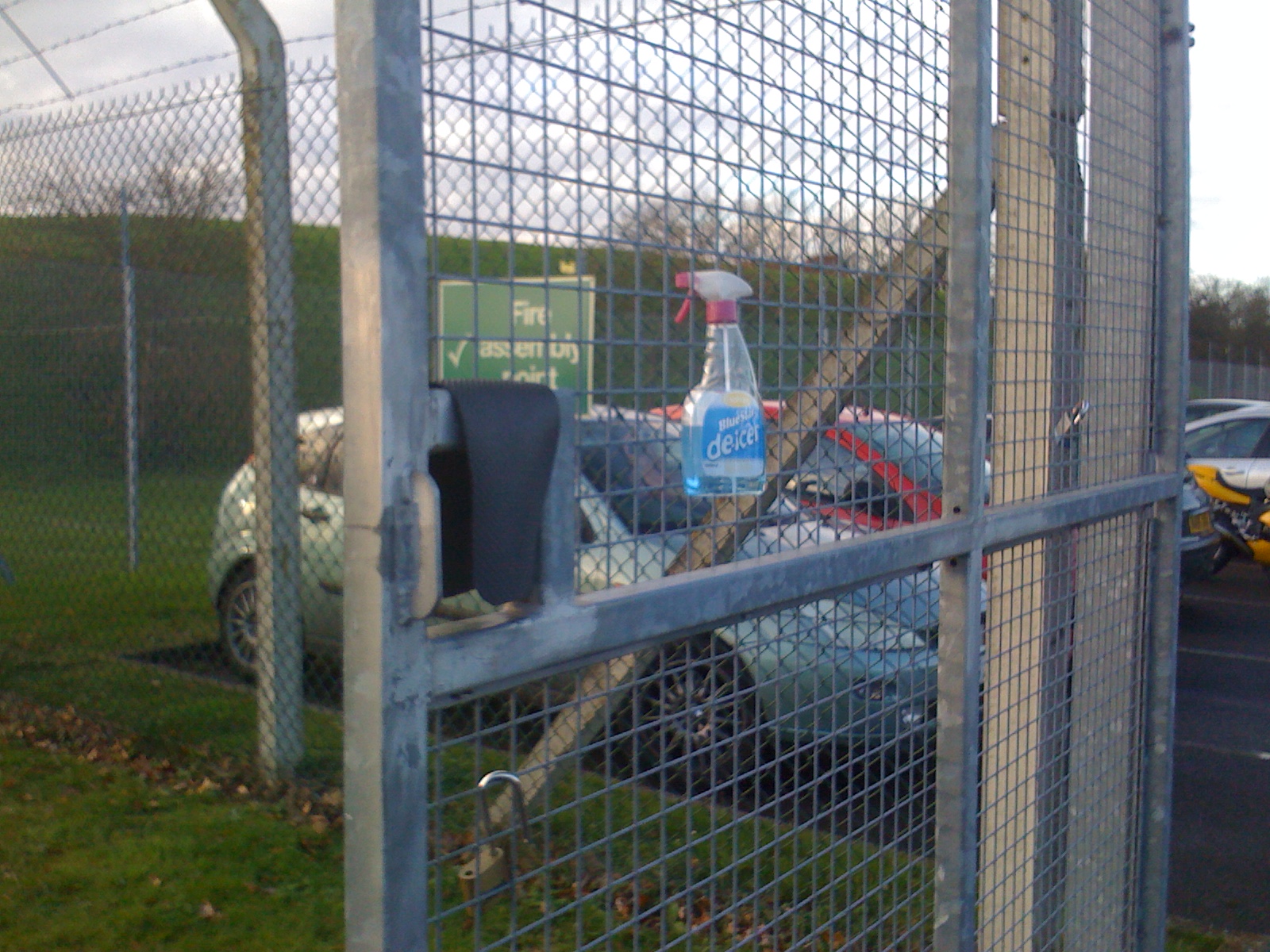
Here’s a photo that shows this sort of trust on a different scale.

This was hanging on the car park gate of a Defence establishment I visited last year.   No-one steals it.  Anyone can use it.

It’s all about trust.  We need to have more of it

De-icer - nice!

De-icer – nice!

2012 – summary in single (ish) words

When we help people to understand mind-mapping, one of the exercises to show people we can remember things from single words or very simple phrases is that we can construct a whole paragraph from the memory jogged from that single word.  In that vein, I hope my summary will jog a lot of fine memories for you!  Biased towards the Olympics, just because they epitomise the essentials of people skills, for me.  How about you?

The Olympics Opening Ceremony

The Olympic Stadium

Opening

Paralympians

Jubilee

Rain

Hose pipe bans

British

Pride

Morning sickness

Trust

Gold

Gamesmakers

Sport Relief

Awards

Closing


MBWA

“Good management starts with footwork. Boxers and cricketers know knock-outs and runs start with the footwork. Managers must use their feet to ‘go there’ creating awareness, understanding and picking up knowledge. Burn your desk. Manage on the hoof.”

I love this quote in today’s post from Roy Lilley at NHS managers.net.  His end of year missive is as good as it gets from anger at the constant reforms, senior management who have no idea how to lead and quite frighteningly stupid targets and measurement supremo’s   Read it and learn a lot!

MBWA?  That’s what Roy was talking about – Management by Walking Around.  I just love “burn your desk”.  Metaphorically, one hopes (where do you put your tea, otherwise?).  I have come across a lot of this not happening in my time.  It is often the “upstairs / downstairs” mentality that pervades a lot of organisations.  I know ‘us and them’ can be perpetuated by those lower down , not just those higher ups looking down their noses – but the result is the same.  Lack of transparency, respect, and trust.  Lower levels of real communication.  Things going wrong.  Resentment.  A feeling of not being involved.  Worthlessness.

Image of Tom Peters

Tom Peters – I think he was the originator of the idea?

Yes – you noticed – not doing this badly infects all other soft skills positives.

Burn your desk.  A New Years revolution is in sight!

Men or women?

Or should that be masculine or feminine?

It feels inherently logical to talk of masculine and feminine traits in managers at least to fit the hard and soft skills stereotypes pretty neatly.

7647

Nurturing, listening, supporting engagement; all soft and fluffy?

KPIs, Performance Management, Strategic Planning; more hunter gatherer?

Where do you put, core values, cajoling, influencing, coaching, accountability, recognition, motivation, teamwork?

It’s not so cut and dried, is it?

I do find the old arguments about which are the traits of a leader and which are those of a manager rather dry too.  Most of us real world people do both, often on the same shift.  OK – the higher up the organisation you are the more ‘thinking the unthinkable’ types of meeting you may well attend.  But we all do both managing and leading – don’t we?

All of us need to get more in touch with what can loosely be termed feminine traits.  They are most helpful to the Soft Skills cause.

But the most important thing to realise is that if we are to make the most of these skills, we really need to make sure we use the right ones in the right context.


Flexibility and adaptability are the keys to this.  Most of us are less flexible and adaptable than we think we are.  Ask the people around you.  Don’t be surprised at the answer.


So it’s not men or women.  It’s masculine AND feminine.  We need both sets of traits to give us maximum credibility and flexibility.