“If only I’d thought of that”

You must have had this happen to you?  Someone says something that knocks you back on your heels, that really takes the wind out of your sails.  Then, on the way home, or even a minute later, you think of the perfect response?  It happened to me recently, and my only redress is here!  I’m just hoping the person involved will see this.

I was at a seminar organised by a blogger who writes about the NHS (I have mentioned Roy Lilley before).  It was a tremendously full evening session, with lots of thought provoking discussion with a senior NHS leader.  Most of the audience were either medics or administrators. Some were from the private sector, who were bidding for various contracts in the NHS.

I was chatting to the person I had sat next to, and when we broke for ‘networking’ I offered my  business card.  “What makes you think I am important enough to have one of your cards” he said.  Now, you can’t feel the tranche of sarcasm that was ladled into this sentence.  I faltered slightly and then said, “Well, as you asked a question about management within paediatric services, I thought you might be interested to know that is the sort of thing I am involved with – I run workshops that help people to lead more effectively.  “Oh?  Why?  Isn’t it just because we aren’t picking the right people in the first place.  We just need to employ the real leaders – those who have got it already.  You can’t train leadership…”

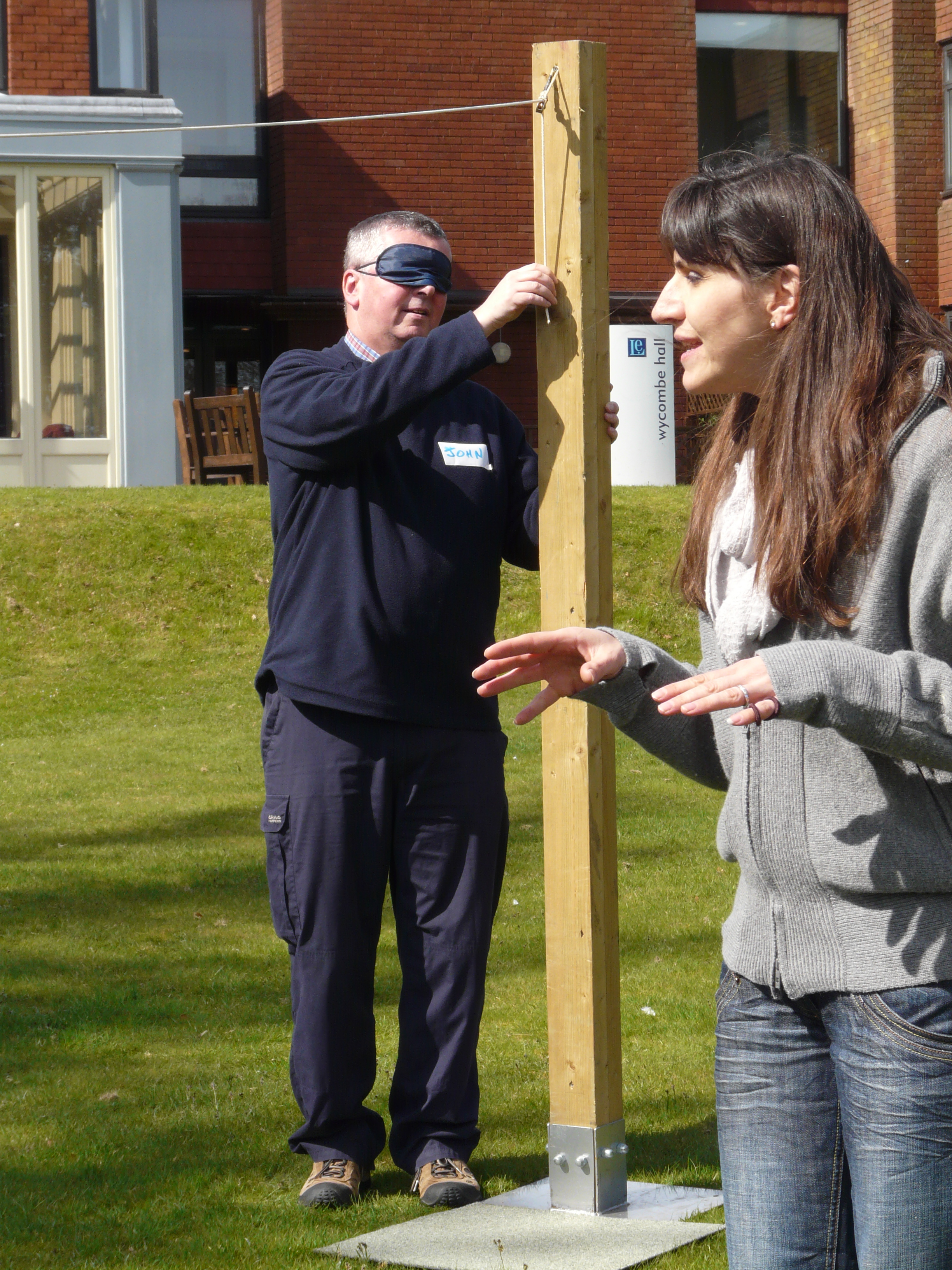
Do we trust that those at the top know we are supporting them?

I moved on, nonplussed.  When I had formulated the right reply, he had gone.  I wanted to say “So, if we wanted better paediatric surgeons, then we just need to employ the people who feel they could be good at it?  I assume you just woke up one morning and thought “I’d like to help kids with serious heart conditions”.  You didn’t go to college for 7 years, then served 5 years as an apprentice before climbing your hierarchy?  Thought not.  Why do you think leadership is different?”

Look – I feel better now.  I would have felt a lot better if I’d said it then.  And that is what I learnt then – a holding comment would have kept him there – “That sounds pretty arrogant” may have given me some thinking time!

“Hand stress back to the rightful owner”

This was quoted on one of the first courses I attended, as a management trainee.  It was back in 1983.  (As an aside, I mentioned this to a group on a Leadership workshop I was running last week – and three of them weren’t born in 1983!  This felt a little strange…)

“Hand stress back to the rightful owner”.  As a new manager, the trainers suggested that it would be quite likely we thought we would be able to fix everything. Including staff who shouldn’t be there, or systems that were beyond repair.

From the soft skills point of view, this sounds quite hard?  But think about it…it is only negatively soft and squishy if you don’t push back.  It’s not fair on the rest of the people around you if you get bowed under and ground down by you taking on what should belong to others.

Someone performing badly?  Why should you defend them?  Yes, you should support them directly to get better – but that involves development, coaching and them taking up the cudgels – not you doing it for them.  And if they don’t take up the stress and the opportunity?  Well maybe a different sort of stress needs to be visited upon them!

“Here’s the example of what you are doing.  This is the effect it is having on me and others.  This is what I expect in the future.  So, what’s your first step?”

Someone handing the stress back (from Trainers Images at www.glasstap.com)

Someone handing the stress back (from Trainers Images at www.glasstap.com)

Being straight isn’t being too hard – it is absolutely appropriate in many situations.

It’s the same if you are  a team member – and you get to much dumped on you.  Learn to say no, and offer alternatives.  Handing the stress back can easily be done without the No word.  “I could do that – but I can’t get around to it until tomorrow afternoon.  Does that fit your schedule?”  And see them taking the stress right back!

Listening

Definitely one of the top soft skills, in my view.  Think about this as one of the central themes for ‘trust’.  In training terms we often call this ‘active listening’.  In simpler terms, we, as empathetic humans, always know when someone isn’t listening to us with all their head and heart.  I run a fun little exercise on courses to prove this.  Someone is set as the active speaker – and is told to prepare by thinking about their last holiday or what they did last weekend – because they will be talking about it for two minutes soon.  Then I take the listeners and brief them to be attentive for the first 30 seconds, start feigning lack of interest for the next 30 secs, then lose interest completely after 1 minute, but come back after 90 seconds – to try to repair the relationship!

It is always fascinating.  Some speakers just stop trying to speak.  Some get angry and say things like – Hey – I’m obviously boring you – just listen up will you?!”


I think she is listening?

I think she is listening?

And these are people at a workshop who know I have set something up…but they can’t help themselves reacting big-time!

The listeners find it very uncomfortable too.  It feels unnatural to be that impolite…

BUT – we all will do it today at some point.  Not quite being there.  Not being fully engaged.  Thinking about our response before we even have allowed the speaker a bit of their own space.  We will interrupt.  We will drift off into thinking about that report we have to write, or that meeting we need to be at.

And – do you know – it will always cost us more time to fix the conversation or even the relationship than if we had just been there, fully, in the moment and listened.  That’s the way trusting relationships are built.

Communication excellence – 1 to many

A lot of us have to present to groups at meetings.  This can be daunting, can’t it?  Whether it is just you as the expert chatting around a meeting room table, or being on stage talking to hundreds, there are some essential rules that can help get you in the right place to make sure your message gets across.

The scary light...

The scary light…

  • Remember, if you interview everyone straight afterwards, 80% of people will remember something different to each other – and half will remember something you haven’t said.  So, go slowly.  Repeat your main message loads of different ways.  And keep doing that.
  • People remember the beginning and end of your talk most.  Don’t neglect signposting what you are going to cover.  The main body of your presentation should cover this in detail.  Then summarise what you want them to take away.  Old fashioned, but it works!
  • Speak louder than normal.  If it sounds a bit shouty in your ears, then you are getting there.  This works even with microphones, but isn’t quite so needed.
  • Smile.  However you feel inside.  Smile.
  • Feel good about how you will feel afterwards – keep that applause and your finishing smile in mind before you start.
  • The presentation is for the audience, not you.  Hard research about what they are after – this is the essence of a well remembered talk.
  • Your slides or other media are for the audience too.  Death by PowerPoint is just dire.  Cut, cut, cut.
  • You know your words and your message.  Our brains are amazing.  We can remember a whole paragraph from one word – so have bullet points on cards to give you confidence.
  • And remember – the audience are on your side and with you nearly all of the time.  Enjoy them.
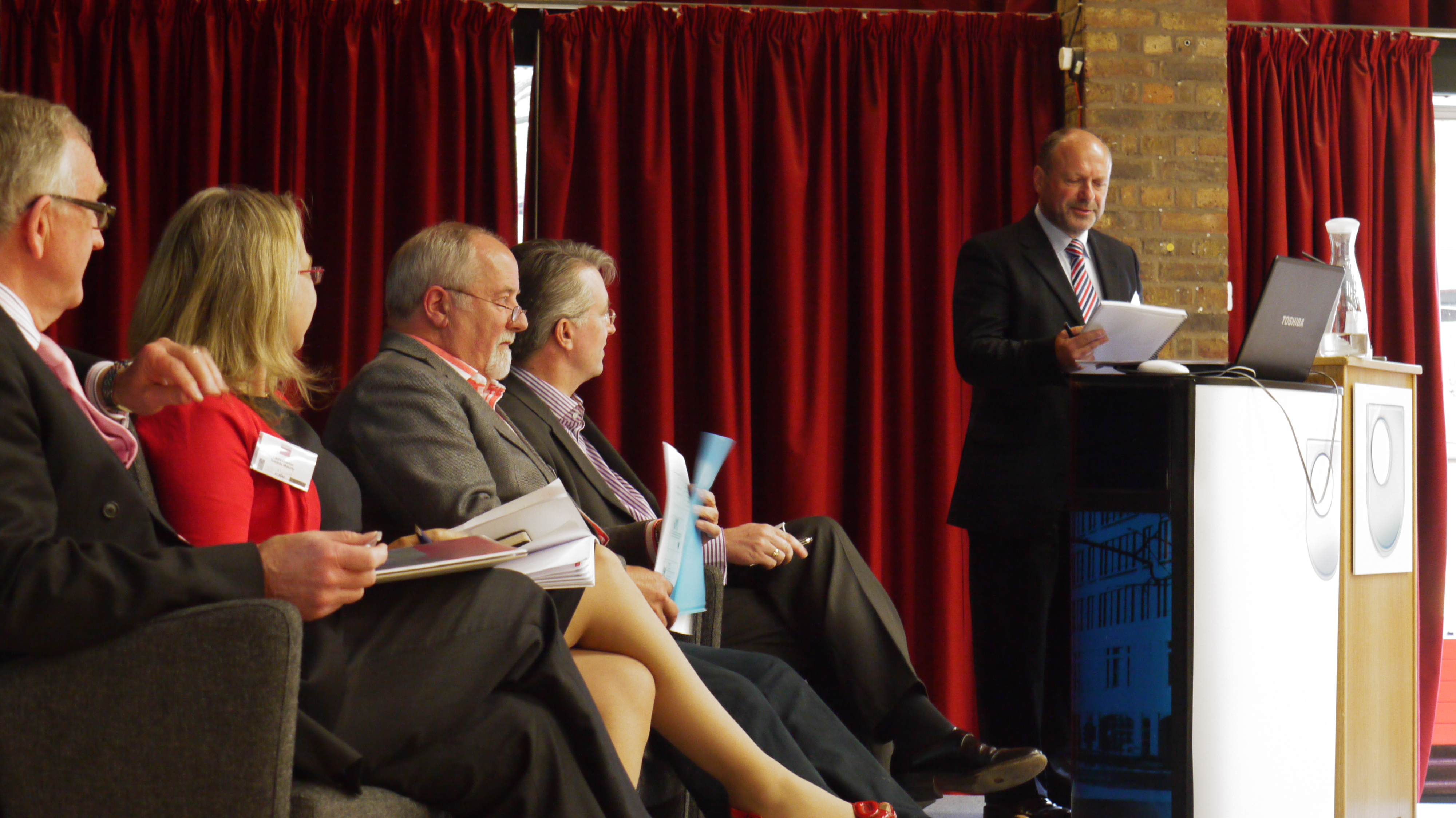
Trying to control a panel - never easy!

Trying to control a panel – never easy!

Guest Blog – Peter Cook “Fiscal Cliff”

This is the story of how a new Rock Song came into being – from my friend and colleague , Peter Cook (Not that one – the one who is a consultant, conference presenter, author – and musician…here’s my interview with him…

1. Tell us about the song – how did the idea start?

As the discovery of Penicillin and the company 3M were started on a mistake, so Fiscal Cliff started with a mistake. 3M bought 3 mountains to mine carborundum and found nothing in them – this forced them to innovate and the rest we know.  In the case of Fiscal Cliff, I’d had a piece in the City AM newspaper, saying that I was writing the song – actually I just had two words at the time !  The BBC World Service phoned up after the newspaper hit the streets and said “Could we have the album?”.  I was compelled to then write the song and record it for them.  I’m hoping the Beeb will now follow through with a programme, having invested quite a bit of money in the project.  By the way, people can buy the single on iTunes, Amazon, Google Play and so on.  All formats available via this link DOWNLOAD FISCAL CLIFF.

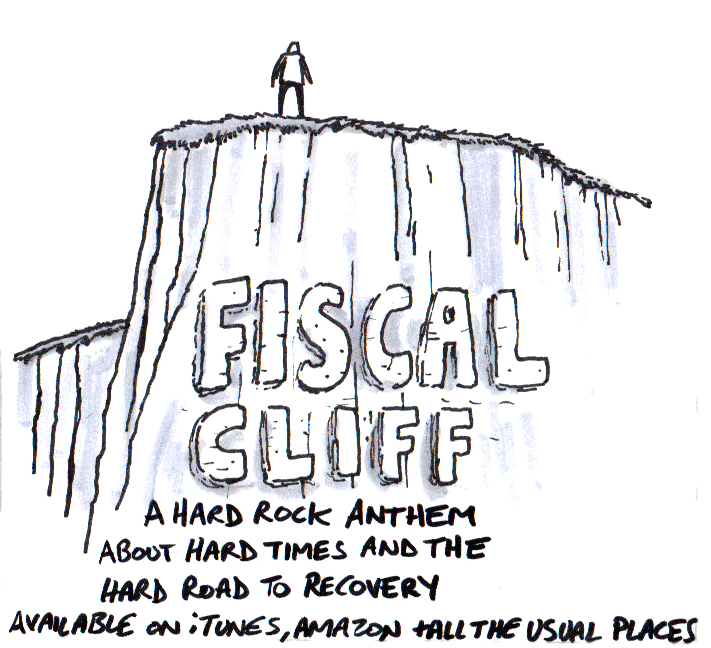
Fiscal Cliff - the single

Fiscal Cliff – the single

2. How did the process of setting up and recording go?

I knew I needed great people to do this so I invested a lot of time in what we might crudely call “HR”.  The hiring process was more like that in the famous film “The Blues Brothers” than anything that the CIPD would recognize!  It was also a lot more effective though.   I called my friend Bernie Tormé, who has played with Ozzy Osbourne and Ian Gillan.  I asked if he wanted to get involved with a Spinal Tapesque song about macro-economics.  He was unmoved.  I pointed out that I would have to hire his studio and he may have to smash a monument of the Bank of England with a burning guitar and he said “I’m there”.  I then needed a singer, so I turned to one of my MBA students who writes poetry and is himself a Swiss Banker.  I had no idea whether he could sing.  He could.  More importantly he brought attitude.  I hired the bass player on Facebook, having put an advertisement out for a female bass player for a song to be broadcast on television.  Just 30 minutes later the reply I got proved that she had read the ‘job spec’ accurately.  It read “I’ve got tits and I play an upright double bass and electric.  Check my music out at Scarlett Rae and The Cherry Reds.  Andee Price can certainly play and she is female.  Life lesson for all of us:  Read the brief and respond to it quickly and clearly!

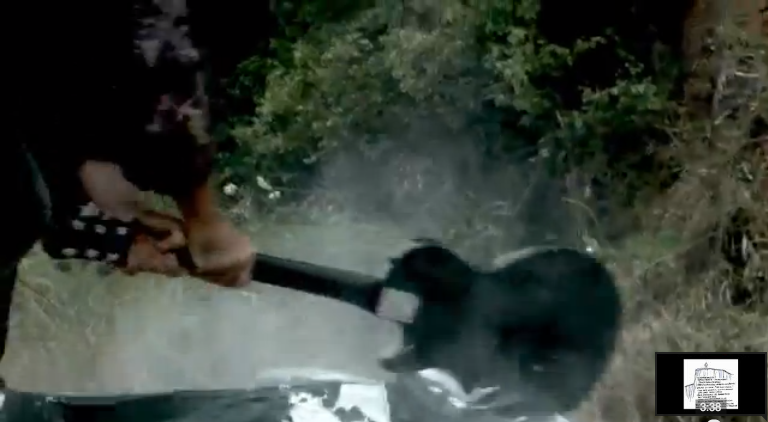
Bernie Torme, Guitarist for Ozzy Osbourne and Ian Gillan smashes the Fiscal Cliff with a  burning guitar

Bernie Torme, Guitarist for Ozzy Osbourne and Ian Gillan smashes the Fiscal Cliff with a burning guitar

We had to fit the recording of the song and the making of the video into one short day, starting at 10 am and finishing at 4.45pm.  This was some going.  We also had to take the “Stonehenge” monument I made to a churchyard, set light to it and smash it with a burning guitar.  It’s the usual stunt for an economics song in my experience!  We only had one chance to get this right on film.  I was helped out by Val and Errol Whitter of i54newmedia who are consummate professionals in making the film.

3. What was harder than you thought?

Selling the record.  We started with a rush and sales on iTunes were racing away.  As soon as we put the film up, the downloads slowed down.  I must admit that Fiscal Cliff – the MOVIE is absolutely superb, but the lesson here is that once people have consumed your youtube video, effectively they have no reason to buy the record online.  I’m sure this experience is mirrored for professional artists.  Am I sounding like I’m begging you to download the song? 🙂

4. What was easier?

Getting media interest in the song.  Within a week it had been in the Evening Standard, City AM, Management Today, a New York based innovation website, local papers, radio and lots more places.  The current media round up can be found at Slideshare – Fiscal Cliff.

The whole recording process was much easier than it should have been.  The ‘band’ came together in Folkestone for a one hour practice, two weeks before the recording session, during which time we played the song in several different ‘genres’ including a rockabilly and country and western version!  Andee the bass player had not met any of us.  The singer and drummer only knew me.  None of them knew Bernie.  On the day, it went like a dream.  It’s really all down to selecting people with attitude and talent and letting them do the rest.  I could not have wished for a better result from the team.  The whole experience was an object lesson in teamwork, which we discuss in our corporate seminars and performances.

5. “So far” tell me the story?

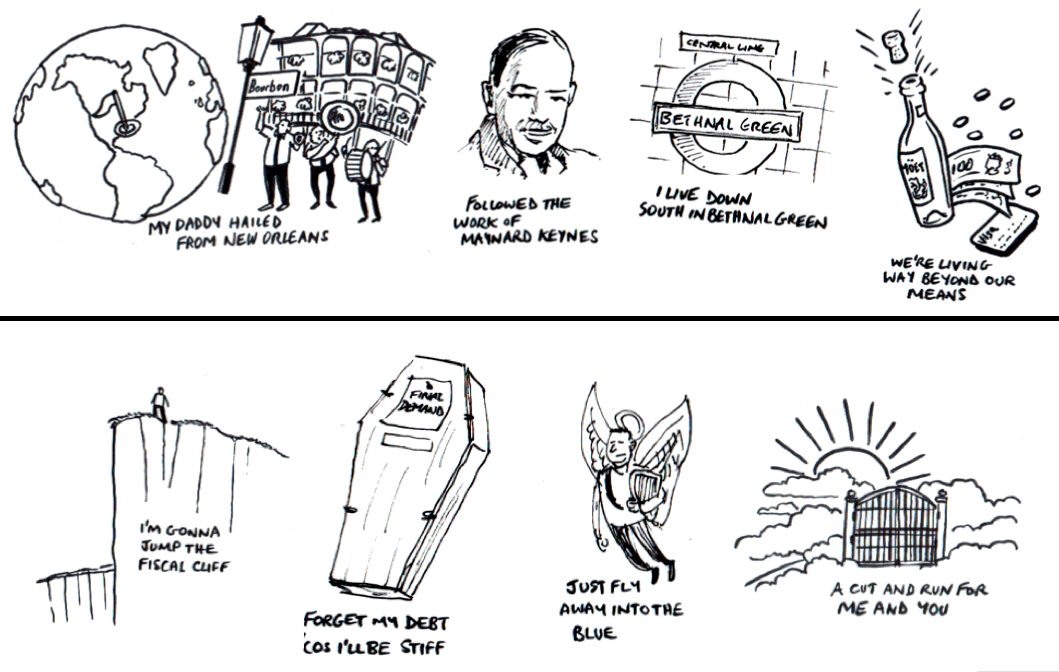
Fiscal Cliff tells the story of a broker who reflects upon his life of spreads, swaps, junk bonds etc. and decides to end it all by jumping the Fiscal Cliff!  He seeks help with his condition in the form of a consultation with “The God of Economics” who reads him a prayer, which changes his mind.  Finally, he pulls back from jumping the cliff and repents, becoming a sustainable business person!  It seems that this story has been key in engaging people with the song.  It’s an unusual twist on the recession.  Somewhat sadly, it’s matched by reality – well the suicide bit.  There was a report of a significant increase in suicides since the 2008 recession hit, with 85% of cases involving men.
Verse & Chorus

Verse & Chorus

6. Where are you now?

Well, I’m off to New York to run an innovation event for a major Pharmaceutical company shortly.  The company have heard about the song and it seems I’m going to have to play Fiscal Cliff on one of their evenings!  Whilst I’m out there, I’m hoping to arrange some press coverage on TV and Radio in New York.  The song was played the other week at my friend Dr Andrew Sentance’s party.  Andrew is a former member of the Bank of England’s Monetary Policy Committee and said:

“Fiscal Cliff follows in the tradition of other rock songs inspired by the economy, like “Money” by Pink Floyd and “Selling England by the Pound” by Genesis. But it’s the first rock song I’ve heard mentioning Quantitative Easing and John Maynard Keynes!”

Another company has asked us to provide a master-class on how we did the marketing for this alongside one of our unique team building events with music.

7. What’s next?

One of my network colleagues in Canada has contacted Bachman Turner Overdrive, Bryan Adams, Avril Lavigne and Celine Dion to ask them to collaborate with me and Bernie Tormé on the follow up.  This is because the new boss at the Bank of England, Mark Carney, is Canadian and regarded as a bit of a rocker.  We’re calling the follow up “Forward Guidance” !! 🙂
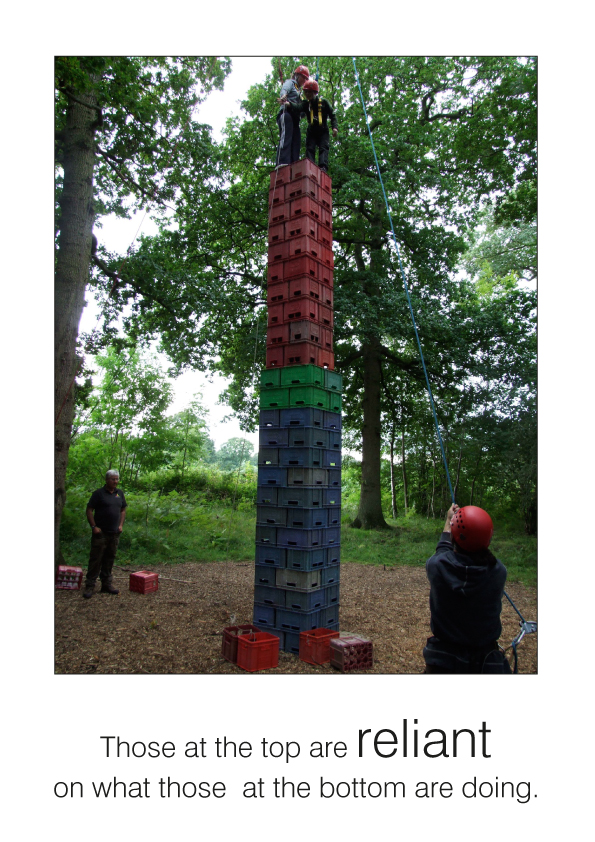
Kindness creates confidence

I’ve mentioned Roy Lilley before – hard witting hard-working Health Policy analyst and conference person.  If you have any opinions or feelings for our NHS – you should take a peek.  His latest blog (access via http://www.nhsmanagers.net/newsletter/ ) was about “The Little Things”.  His main story was linking the little things that make a difference in Supermarket choice to the little things that mean a lot if you have to access NHS services.  His mum’s friend had been in hospital recently.  Roy was cringing , waiting for the news of bad behaviour, lack of cleanliness or just bad treatment choice.  He shouldn’t have feared.  They were all so kind.  Everyone was so kind‘, she said.

Now I don’t know about you, but this made Roy proud, even as ‘just a bystander’, as he self deprecatingly described himself.

Little things do mean a lot, don’t they?  It’s that moment when someone says, whilst you are waiting for your Cream Tea order to be taken “I’ll be with you next – sorry about the wait…”  Or conversely, if you have been on hols in Devon last week, and your experience of the same situation was “(…if I don’t look at the customers and race past because I don’t know what I’m doing as I haven’t been trained and no-one seems to be boss around here and I just need to look busy…”) – then that little incident means a lot too.

Little things mean a lot.  Same situation, completely different feeling for me.

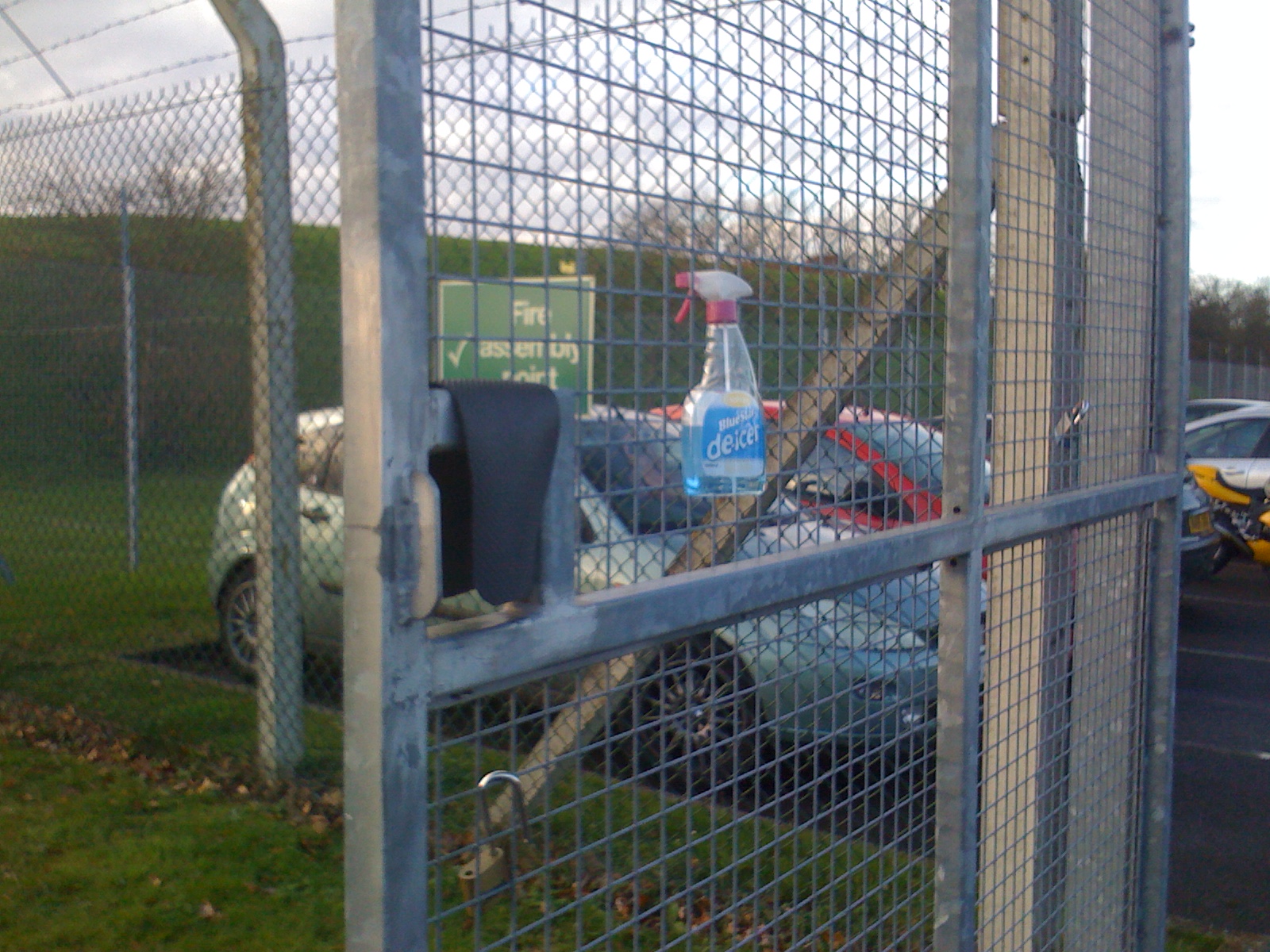
De-icer - a little thing that meant a lot to me in February, just left for anyone to use at a company car park

De-icer – a little thing that meant a lot to me in February, just left for anyone to use at a company car park

How often does this sort of thing happen in your daily life?  Yes, the big boys (still mainly boys, sadly) are sitting in their meeting pontificating on strategy and vision.  And the Customer Service team are spending hours on sorting out complaints.  Yes, both are important things to do.  But the way to success is often much simpler and day to day, and it’s too easy to neglect that in our big picture views.  It is about feelings.  It is about being polite and involved and being there and smiling and saying thank-you and fixing stuff and saying sorry and being happy to help and support each other.  That’s all.

And it is so easy to forget it in our busy-ness

Communication Excellence

Oh dear.  Where do you begin with ‘communication’?  We just need to improve it?  Daft as it may seem, it is the one thing that any of us who work as consultants can almost guarantee to put in the report for the board before we start any investigation.  That is an indictment in itself, I suppose.  But, like everyone agrees they need to improve their time management at their annual appraisal (more of that later…), every organisation can readily agree that they need to improve communication.  Where though, do we start?  This is too much for one blog – so the first one is going to be about…

Individuals

I am sure we all agree, that it is them that cause the problem.  We are fine.  So are our friendly colleagues – the people we like.  But the rest?  “I just don’t know where they are coming from…”  Ever said that?

I don’t know how to break this to you, but that is the essence of the problem.  We get on best with people who are like us.  The real skill is being able to flex our style so that we build bridges with more people.  You don’t have to love people at work.  You just have to make sure you all know what you are both on about.  That means not assuming, checking, listening (actively – don’t think of anything else when someone is talking to you.  It’s rude and slows things down).


So hard when one sense is down...

So hard when one sense is down…

Let’s just consider two basic personality types – the extrovert and introvert.  Both trying to get through to each other.  The extrovert not listening, but talking.  The introvert listening, but not speaking.  Never the twain shall meet!  Unless the appreciate where each other is coming from…and make allowances for each other.  Extroverts need to shut up and listen (even if they have to bite their tongue for what feels like ages…) and the introverts need to jump into that quiet space and say something – a question will do as a start, because you can then shut up again…as a reward.


Alright, there is much more you can do (I use various profiling tools to help, like Insight to Communication Styles), but just get that basic right, and you are on the way.

Emotion

Usually ’emotion’ is kept out of business.  I have had a lot of delegates on Leadership courses I have run over the years.  We do a lot of self analysis, psychometrics 360 feedback and a good deal of soul searching.  Yes, the solid Feelings people in Myers Briggs terms do get the positive push of emotion.  The Thinkers?  Had a great quote from a delegate recently: “Yes Phil, I do understand that I am a bit hard headed, and just want to get things done.  I suppose I realise that I should be doing these soft things sometimes.  I may just have to delegate it though…”

But then we get to sport.  Was there emotion in Andy Murray yesterday?  There certainly was when he lost last year’s final.  And Bartoli in the ladies final?  Steely determination and absolute focus – and quirky and fun and loving and crying afterwards…but her opponent lost it in her head during the match, and the errors – unforced as they are called in tennis, because they are your mistake – culminated in poor Sabine Lisicki actively crying on court.  She restored her pride and her game towards the end, but it was too late.

Andy Murray Wimbledon Champion

Maybe it is about the right emotion at the right time.  But I think you should have pride, excitement, high five feelings, and at least once a week when you can honestly say “That’s why I love doing this job”.  If not, change what you do or the way that you do it, in my opinion.

The recently retired Manchester United manager, Sir Alex Ferguson was present for Andy Murray’s semi final, and had a 20 minute chat with him afterwards.  Andy said it was priceless advice that he wouldn’t be sharing. We can imagine some of it was about not giving in.  We have witnessed some astonishing comebacks engineered by Sir Alex over the years.  Two seasons ago, they lost the Football Premiership title to their local rivals Manchester City, when they overtook them with the last kick of their game.  Apparently, Sir Alex addressed his disappointed players on the way home on the long journey from their away game at Sunderland.  “Remember how this feels.  And put that right next season”.  I would think that was all he said, and was all he had to say.

Andy emotionally drained...

Andy emotionally drained…

Channelling our emotion (like Murray, Bartoli and Ferguson manage without thinking) may be a key to success that we shouldn’t ignore.

To desk, or not to desk?

I did promise to write about desks after my last missive on the NHS.  The application of my off the wall idea may indeed have wider implication and utility, but the pressure cooker environment that is the NHS (constant imposed change that feels intent on killing the service by a thousand cuts being foremost in my mind) provides us with a sensible and captive model.

Here it is.  No board member or their direct reports should have a desk or an office.

2586

What problems would that solve?  (Thanks to Glasstap and Trainers Library for the above)

A consistent theme running through Francis report (1 & 2) and Geoffrey Robinson’s TV series “How to save the NHS”, and my own experience would suggest that a closed door policy exists; that senior managers are remote from front line staff; that there is little input into decision making from staff members.

All solved at a stroke.  The board would have to be out and about.  I’ve mentioned Management by Walking About before – and now we have a simple mechanism to make this happen.  MBWA is just a guru wish without a mechanism to force it to happen.  No office or desk?  You don’t have a choice.

I know managers need to do some work behind closed doors.  There should still be boardrooms and meeting rooms, and the senior team would be able to hot desk there, amongst their team.  And the meetings would still happen there.  And any discipline or private meetings (typing up your resignation letter because you were culpable of presiding over a shambolic service, for example) would happen in small meeting rooms.

Simple.  Successful senior managers spend more than 50% of their time in informal meetings with members of their teams, at all levels of the organisation.  Staff would be shocked and probably amazed at first – they may have to ask “Who are you” when you first arrive on a ward, but that will pass.  But it could work.  Cut the umbilicus between the board and their desks, and we are on our way to fixing the NHS – and maybe other organisations too.

Letting go

Another superb blog today from Roy Lilley at NHS Managers. net.  Here’s the bitly link:

http://bit.ly/16R6AeE 

“Bitly” is a brilliant free tool that can shorten any link for you – really useful for bloggers and especially useful for tweeters – saving loads of your 140 character limit…

The title of the piece was ‘letting go’.  It is all about trust, delegation, involvement, empowerment and delegating responsibility and accountability.  Yes, if your are chief exec, the buck should indeed stop at your desk (more later) (about desks). And  there do seem to have been too many times recently when the captain has abandoned the ship before all the passengers have been catered for.  But you should let go to get more done.

In case you are not convinced to go read yet, here’s perhaps my favourite section:

Don’t over organise; let-go and give people the space to self-organise and create natural, informal groups, gatherings, huddles and teams.  Leaders will emerge, consensus will surface and people will sparkle.  Give them room to innovate.  Understand it creates more failures than it does successes.  Asking people to innovate without being free to fail is like giving your other half a programme for a West End Show and calling it a night out. 

Isn’t that just stunningly simple?  As with all common sense, it isn’t that common in practice.  It takes guts, and a complete change of focus inside the managers head.

566

Keep them involved – and informed (from Trainers Library)

If you read my last blog, Funeral for a Friend, we had a movingly sad celebration of a great woman yesterday.  We were in county Durham and had plenty of hours to talk on the coach to and from.  One of my friends has been on courses with me and we chatted.  “I didn’t think I’d be able to let go of that task at all.  I love payroll”. (note from me: it takes all sorts, and thank goodness someone does!). “But our new person is more than capable of doing it – and in fact is embracing the recent PAYE changes easier than I could because it is all new for her. I’ve got 4 days of my month back now”.  I asked how this had been able to happen:

“Because I changed me”.

That is my only concern with any sort of obvious but rare approach.  Roy is right – this is absolutely the way forward.  There will be managers who think “that’s for other people not as successful as me” – and they will be wrong, long term.  There will be others who think “that’s all very well, but I’m paid to manage!”.  And they will expire overworked and unloved.  Then there will be the leaders, who think, “I should be doing this, and more”.  Their teams will thrive.  And so will they.