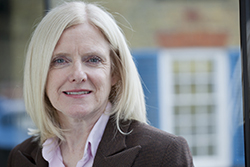
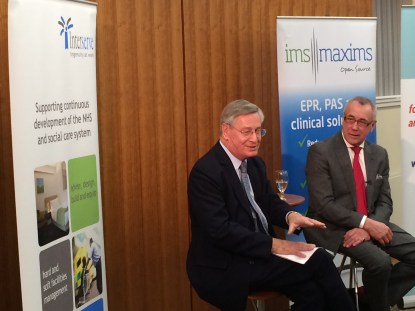
Stephen Dorrell, Head of The Fed

Stephen Dorrell was an MP for 35 years, and retired from House of Commons – did not contest – the last election.  There may have been a conflict of interest problem, as he was joining KPMG who were also bidding for NHS contracts.  He – as one would expect of a man who seemed properly full of integrity – resigned from the Health Committee he was (the first elected) chair of, six months before the election, as he was overlapping the old and new roles.
WP_20160202_17_19_46_Pro

The Kings Fund by Night


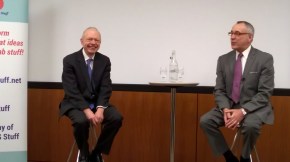
This blog is my own personal views of a meeting at The Kings Fund in London, where Roy Lilley from NHS Managers.net pulls few punches and manages to pull a lot of the ‘what makes this person tick, and do what they do’ background.  It does help to see and feel where our movers and shakers get their own motivation.

Apart from the KPMG job, he is also the Chair of the NHS Confederation.  This to me (and the usual health warning – some of this is my own opinion!), looks like an organisation with almost too wide a wing span. “To be a system leader and a representative voice of its members, while giving direct support for NHS leaders giving best possible care to patients”.  Wow – laudable – but how?  Maybe for another day.  As a semi outsider, I didn’t quite get the remit…

He does come over as a genuinely nice guy, and highly committed to public service.  Yes, he does have a preference for marketization, and I sensed a bias towards ‘private is best’ (I don’t mean private medicine – just private companies creating better efficiencies and outcomes).

His background was in business – family business, in Uniforms.  So not just a career bag carrying politician.  Became a Minister of Health under Ken Clarke as Secretary of State.  The 1990 act, creating the Internal Market as part of it – the Purchaser Provider split (Purchaser became Commissioner more recently). This was one of the key themes of the chat.  One of the questions at the end was the costs of such a system.  The costs of actually having the split – administrating it, essentially, I assume – was 14% of the budget.  Those who work in multi national or Group organisations will recognise this.  Transfer Pricing and accountancy controls like Activity Based Costing all cost people, money and time to actually do them.  And to what end?  We just need more administrators and accountants to do it.  And they are going to make it opaque enough to ensure they keep their jobs, aren’t they?  Turkeys don’t vote for Christmas…I do understand that having budget responsibility is as good a way of focussing on efficiency as anything.  I think it is costly and too simplistic.  Outcomes Efficiency is the gold standard to me.  And I am sure we can never come up with the correct key performance criteria because it is much harder than looking at the input finances.  Just because it is hard to do doesn’t mean we shouldn’t try?  As Stephen said many times “What does good look like?”  And when we have that we share it – maybe through the likes of Fab NHS Stuff (got the plug in for Roy and The Blonde there…).  To change the mind-set, Roy suggested changing Commissioners to Brokers of Health Care.  Feels like re-arranging the deck chairs on the Titanic to me…possibly.

Devo Manc was exciting Stephen too.  He thought that this move (essentially giving all of the health and social care budget to the Local Authority) was as likely to have as much effect as Beveridge.  Hopefully positive effects – unlike Andrew Lansleys 2012 Act – (we will say no more here…).  The vision he offered – Holistic view of Health, Social Care, and all the agencies that stoke that fire – housing, schools etc. should be seen as a whole, not silos.  One of the difficulties is the money – who pays for it.  As Prof Brian Jarman said, 5% of the population pays for 70% of Public Health (I do hope I got that correct – I am sure Brain will correct me quickly if not!)  And one of the biggest difficulties, as Roy Lilley said, is where do we draw the line between means tested and not?  Free at the point of delivery?  But the majority are responsible for their own care costs now in Care Homes?  I think the Dutch Model (Buurtzorg) for more homecare could provide the bridge here.  And maybe we should still have Nursing Homes – NHS funded.  My definition of whether it is Care home or Nursing is if the Ward needs to be locked – then the patients are just that – long term patients, so their care should be at the point of delivery.  And we keep people out of care homes and out of Hospital by using the Buurtzorg model of home care.  Budgeting solved?
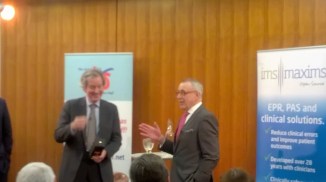
Stephen Dorrell Health Chat

The obligatory Penderyn Welsh Whisky…

The vision for the future – Holistic oversight of Health and Social Care, like Manchester, with the centre (wherever that is) setting the standards, and the Broker/Provider split managing the budgets feels good.  The arguments will always be amongst the ideologies. What proportion of providers should be public and private, for example.  But, the overview vision feels good to me.

Stephen entered public service to be ‘on the field of play’, and to be someone who was ‘making the difference’.  I did get the feeling that this deeply held conviction was both sincere and is likely to continue for some time to come.


Professor Sir Cyril Chantler

NHS Managers Health Chat, Kings Fund London

IMG_0063

Sir Cyril in full flow!


Roy Lilley was in conversation with Sir Cyril Chantler last night. I confess to not really knowing who or what Sir Cyril was or had done…That is the joy of these chats! You discover the person behind the position and career.

Roy promised a lot in the pre-marketing.  Apparently, we were unlikely to find a more experienced, knowledgeable, thoughtful and enlightening person in the Health service arena. Hyperbole justified or not?

Usual health warning here – these are my take on the event, and even if you were there you may be thinking ‘I didn’t think that’.  OK – I’m opinionated (maybe not as much as Roy!) – but if you are upset – write to me or do your own blog!

The lovely thing that happens is we get to know the person underlying their current position. What shaped them. Why they do what they do or are what they are.  That’s Roy’s gift and skill.

Why medicine? He was an ill child – Asthma before inhaled steroids.  Sir Cyril knew he wanted to be a doctor then.  To help the sort of ill child he was?

I started to note many quotes – always hard to write the whole thing without tape or shorthand…so apologies, Sir Cyril and Roy if they are slightly wrong, but the flavour is right I think.  Let’s go!

“This is the first day of the rest of my life” First day at Guys – it sounds like he felt he had come home.  After becoming a little disillusioned with medicine at Cambridge (too much science, not enough patients).  The reverse was true at Guys.

“The paediatricians seemed the most human of doctors”. Which I why he ended up there.  Or could his childhood experiences of asthma attacks have pushed him that way?  He counted it as “serendipity”.  As did the specialisation in Nephrology.  This sounded like just being in the right place at the right time, and having the right pioneers around you – a chap called Norman Veal, the father of nuclear medicine.  Great answer to ‘why kidneys’?  “Much easier to understand than the brain”.  Touché!

“I knew my limitations” . Interesting answers around doc training. You had to be qualified in Adult medicine before specialising in paediatrics. 8 years training after 2 years SHO to be considered for Consultant status. “We were trained in things we did not need”.  Germany and France – the path is 6 years and 4 years respectively.

Politics and power? Interesting glimpses. He has been around and both watched learnt and advised. :

  • “Managing Chaos is enormously expensive”. The problem though with just throwing money at chaos is it gets lost? More money and no plan doesn’t work.
  •  Holland – the health care model deserves importing.  Some local taxation.  Buurtzog Homecare involves nursing at home, so keeps the hospital bed occupancy rate at 80%.  Which means no hot bedding.  Which means cross infection  rates were ZERO (mainly because you can fumigate the bed and sterilize the bedsteads between patients).  Can I just repeat. Zero.  Zilch. Nada. (Now we have privatised to the cheapest providers, will we ever be able to reverse that?  Not until someone takes a whole systems view of health care in the UK, I think.)
  • Doctors and Budgets: Clinicians have to have responsibility for efficiency and expenditure, in Sir Cyril’s view. I agree.  At Guys he worked with the top team to make efficiency savings of £7m in a £50m budget over 5 years. “Give me £1m now” he said. Here’s the quote of the evening – so, a separate line!

“You cannot do change unless you front load it”

And guess what?  He got the pump priming money.  And delivered the savings.  Although, he didn’t do that himself.  “Chairman don’t run things”.  As Roy said – management’s job is to make the space for good people to do great things – and get out of the way.
Wow.  And you need excellent administrators “Administration is a profession.  Management is a job”.
Yes, there need to be new ways of providing care.  Social care and health care need to be merged. Some parts of social care have to be means tested in his view (Roy worried how the sort the grey areas – which is always the problem – devil is in the detail). Yes, we may need more professionalism (clinicians who are professional administrators too?). Maybe Doctors who don’t strike, or who don’t feel the need to strike?  Allow clinicians to have proper family lives? Keep the politicians away from Health Care?   It was all discussed.  Some final quotes to get you thinking:
“Conscience versus contract – you need to start with Conscience…”  Also, he felt ‘contract’ should be replaced by ‘Compact’.  I like that – much more of an equal partnership, a meeting of minds with the same end game view. Together, not adversarial.
“You get better outcomes with very good team work”  Amen.
And finally, Roy asked,”So what would you advise Jeremy Hunt to do now?”
“I’d send Roy Lilley in”.
It may have been in jest, but you feel it might help!

Team Dynamics

I was introduced this week (at a Graduate Recruitment assessment centre) as “An expert in Group Dynamics and communication”.  Simultaneously pleased and flattered, I just nodded and agreed.  (Like I allow people to do on assertiveness training workshops…).

1517


It happened again at a Management and Leadership workshop.  It is that joyful moment when the team realise no-one else is going to make things happen except them – and they are suddenly up for it.  Look, if I knew how that happened or why, I would have to charge a lot more.  Sometimes, I really do think you just have to hang on in there, keep learning (or at least be reminded of) some tools and techniques, and then get to know and respect what your other management colleagues are bringing to the table.  it is slow but inevitably more sustainable then drafting in a new team to act as a broom.  Continuity is all , and the glue that holds the values and vision together .  Confidence and some success to sustain that confidence, is the magic dust to sprinkle on the glue.

If there is an absence of any of the following, I find teams are not dynamic, and often dysfunctional:

  1. Respect for the strengths each bring
  2. Mutual understanding of each others roles
  3. A shared common agreed and enacted Vision
  4. An agreed set of short and medium term goals
  5. Overlapping core values
  6. Passion – which creates disagreements on ‘how and why’
  7. Members are excellent at working through and getting past any difficulties
  8. Equal pain in division of tasks

We don’t have to say “Good Communication”.  If the above is in place, then good communication happens.

It is simple, elusive, volatile and so exciting to be involved with a highly effective team.  I did some market research into how often people feel they had been in a Rolls Royce type of team – one where everyone else in the organisation clamoured to be involved; even your competitor organisations knew about ‘that team’?

Most people said it had happened once or never at all in their working lives.

How sad is that?  And the thing that stopped the hyper effective team most often?  The leaders above didn’t support or respect the team, so they broke up.

But it is worth pursuing the dream…

Janet Davies, RCN Chief Exec and General Secretary

As Roy Lilley said in the introduction to his conversation with Janet Davies Chief at The Royal College of Nursing, “Sometimes you get a bit of luck in your timing – the planets align – right guest, right time”. OK – it was also the day of the last minute cancelled Junior Docs strike, but the nursing profession has certainly been high in the news agenda too.  And Janet is head of an organisation that has 430 000 members (tried to corroborate this on web-site – sounds absolutely enormous!) Janet didn’t have a long commute from HQ at 20 Cavendish Square to The Kings Fund in the same square… except she was arriving from a meeting in Manchester.

Janet Davies

Janet Davies

As always – a health warning. This is my views of the conversation at this NHS Managers Health Chat meeting, and my opinions added in too.  And this is more hands-off than ever – as I watched the event ‘as live’ on Periscope.  Not quite the same as being there, but hey, better than nowt when you are far away…

My overview? One Tweeter got it spot on. “I like Janet – so straightforward”.  I also felt commitment to her members, passion for the profession, and forthright hard-headedness.  Roy facetiously suggested she was more Doc Martens than cuddly, but I think we will brush past that.

We had the ‘do nurses really need a degree’ spat. I do understand the concept of ‘why should the only health Care professional you meet without a degree is the one most hands on’.  But I liked the additional argument of a degree level of education gives you added confidence to question on an equal level.  Those around you on the ward round are your peers, not superiors. It really does add a piquancy of depth of knowledge which boosts confidence.  And then the argument around bursaries and whether nursing should be the only degree that is ‘free’ to do.  Again, an argument from Janet that I hadn’t heard before.  The entry to a degree being the provision of a student loan could preclude many from getting on courses.  The returners after having a family; those who have already done one first degree – and more.  OK – maybe there needs to be provision for those groups.  But I see the old apprenticeship model, where nurses work on wards (and indeed in the wider community) and get paid for that whilst also studying for their degree, does sound a logical middle way?  I still like the idea of the new prospective student nurse being in the sluice room for the first week to see if they can hack the s*it that they will encounter during their career both physically and metaphorically, then at least they can pull out inexpensively and early.  No harm done…

The other major theme that reared its head for me was the law of unintended consequences.  Let me give you what I heard:

  1. The current crisis of lack of nurses.  We don’t have enough in training (getting better now – but 3 year lag, of course). So safe staffing levels are not possible, or even attainable – we just don’t have the bodies. We cut nursing training places whilst Trusts were applying to become Foundation Trusts.  The easiest way to hit the balance sheet requirements was to cut nurse numbers (70% of the costs of running a hospital is staff costs). And then we end up with Mid Staffs?
  2. Measuring the wrong things leads to the wrong outcomes.  Janet had also been Acting Manager of an Ambulance Trust.  The 8 minute rule for attendance was skewed by rural areas and central metropolitan areas.  So, people pressed the ‘set off button when nearly there!  People will always fiddle their way around a stupid non patient focussed target, in my experience.The
  3. The Target Culture. We only ever measure what is easy to measure, not what is important.  And now, the unintended consequence is we can’t change the CGC and others because to do so looks like you don’t care about ‘quality’ anymore.  Outcome measures are the best success criteria?  And much harder to assess…
  4. The Internal Market Makes workforce planning almost an afterthought…and almost impossible to do
  5. No pay awards for 5 or 10 years. How can Mr Hunt then moan about agency nursing costs?  Guess what?  Nurses do an extra shift through an agency to help top up their pay to help pay the bills

There were more examples.  I am starting to think unintended consequences is why every reform in the NHS seems doomed to failure!

Conclusion? A string, passionate and very followable leader, who straddles the two RCN stools of being both a Trades Union and a Royal College rather admirably.  Nurses – I think you are in good hands.  And watch out if you are anyone else in high command in the health service…

Lord Philip Hunt

Lord Philip Hunt, Shadow Deputy Leader of House of Lords, and former Trust Chair 

So here we are again at one of Roy Lilley’s Health Chats.  As you can see from below, I managed to get Lord Hunt to accept one of my books, and to pose with it!

Lord Hunt, Roy Liley & a cook Book

Philip Hunt and Roy Lilley admire my book!

Why was he being there at The Kings Fund?  Apart from the above, he is also Shadow Health Spokesman.  That’s good enough for me…

I had half hoped that Roy Lilley’s avuncular yet barbed style might have morphed into a Paxmanesque routine. How many times would he ask “So, what is Labour’s Health Policy?”

Was I disappointed? Only slightly. Three times was enough.. but it is amazing how you don’t need to be barbed to get some deep insights, and the occasional, “Did I hear that right?” moments.  As always – a health warning here – these are my own views and opinions of the event, and if you were there, you may interpret differently.

NHS Managers.net - and Lord Hunt

Calm before the questions!

He’s been around a bit. Baron Kingsheath (a bit of OK Birmingham), was on a sit-in with Jack Straw as Students Union President back in 1968. It seemed important at the time. Then on to an Iron ore mine in Australia (but as a dish washer in the surface canteen). Been there at a lot of the changes (and there have been a lot) in the NHS.

What always impresses me with the folk who get there – really at the top of their profession, pulling the levers and making things happen, is their sensitivity and ordinariness. But then you get the twinkling intellect – the memory for names, places and what happened – and the absolute passion.  Philip added a dry sense of humour and self deprecation to this mix.

It was the names and anecdotes that hit home for me.  Frank Dobson (so good that Blair sidelined him into standing for London Mayor) – was so different as Health Secretary.  He praised people (heaven forfend…).  He made the service make waiting times come down to a position where it wasn’t worth having private medical cover.  Astonishing. Now they are increasing exponentially.  I wonder if the government has any contact with private health care providers?  Sorry, becoming a bit cynical…

Some other powerful quotes: “…Enforced marketisation”.  I loved that.  And any organisation that has had Activity Based Accounting, or ever cross charged to another part of their organisation will know all it does is cost bureaucratic money.

“Why is the NHS supine in the face of the ludicrous things it is asked to do?”   What a great question.  I suppose there is no leader, no head, no General to turn to, to complain.  Maybe the Trusts and the GPs and the Junior Doctors (such a dismissive nomenclature), should start saying NO?  Maybe just to ask for forgiveness if they screw up, rather than forelock tugging begging for permission to do what they know is right?  “There are a litany of new demands placed on them which are very removed from reality”.  Amen.  Start handing stress back to the rightful owner, you local leaders…and let the central guys sweat.  Or just work with The Vanguards, and cut all the others out.  Maybe only pay for your CQC inspection if you firstly concur, and secondly that their suggestions for improvement actually work.  (What do you mean they don’t make suggestions?  Why pay then?  You wouldn’t pay an external consultant unless their report gave you suggestions?) (That bit was just me ranting, like Roy does occasionally (!) about the CQC and others…)

Lord Hunt was slightly more circumspectly political when the Junior Doctors strike ballot surfaced. No real advice to the other Hunt, but I think there was a glimmer of sparkle in his eyes which I read as ‘serves you right for being so negative and condescending’.  I may be wrong….

Devo-Manc was discussed as a good idea, but will the money really follow? (and if everything is devolved, and we stay in Europe – will we really need 650 in The Commons, and the 850+ of their Lordships?).  Contentiously, the prospect of Social Care being means tested did surface too.  I got the feeling Philip thought it inevitable – and it is happening by stealth anyway.  The Dilnot suggestion for limiting the amount you spent on your Social Care was in the Conservative manifesto, but conveniently dropped once they got in against their own odds…

I have a simpler suggestion.  Means Test all social care, and let the local authorities do that.  But if your mum is in a Nursing Home – as they used to be called – then that should still be NHS funded.  How do we decide it is nursing care?  Simple.  If the ward or home has to be locked, because your mum may walk out and harm herself, then that is Nursing, and should be NHS funded.

Lord Hunt quietly talked of the madness of allowing GPs to look after £80Bn of funds when they look after the governance of it themselves.  No public involved.  No real accountability.  He just quietly dropped that in, as is his style.  If you weren’t there you missed the musings and war stories of a fine man.  I just wish he wasn’t Shadow.

Another report from a Roy Lilley event!

Samantha Jones, Chief of the Vanguards – that was last weeks NHS Managers chat with Roy Lilley and Samantha Jones at The Kings Fund in London.  Here’s my blog – we can learn a lot from the folk at the top and sharp end of NHS change and reform…And here is Sam herself….

But the title sounds like the sort of thing you might see in a sword and sorcery series.  I don’t think Sam would be flattered by that, but hey, Game of Thrones has been very successful for Fox…

You may have heard of Vanguards. As ever at a Health Chat at the Kings Fund with Roy Lilley, you do expect an awful lot of the background to how the person got to “today” because that informs what they are now trying to do.  And why they are well suited to it…or not.

Sam is well suited. She doesn’t do detail. So she lets the people at the sharp end make things change. She said her job is just to create the space so that can happen.  If only all the micro managers out there could see that is the only way.  Not the best way. The only way.

As ever, a health warning. This is my own views of what I experienced at The Kings Fund on  29th October.  You would have a different take. Read it as such.

So what are Vangurds for?  We’ll get to that soon.

Background? Roy’s first question was about her children when young. If you were there, you understand the context. But her answer was fab. “I wondered why I’d said yes to this interview, and I am definitely wondering that again now”. And then when Roy kept interrupting (he gets excited), she cut him dead with “I am still speaking”. Not, you notice “can I finish please” nor “I’m sorry, you are interrupting”. It was the far more assertive statement of fact, which meant Roy had to shut up, and that was mainly because there was a guffawing cheer and applause from the assembled! She must work in committee like that?

Loads of her mentors and bosses had given her space to “do stuff”. She continues that philosophy in her daily work.  I don’t know all the names she dropped into the conversation, but the CEO of the NHS? At the time was Duncan Nichol? (Sorry Sam – this got lost in translation from my notes!) Anyway, she contacted him as a management trainee to ask to shadow him for a week.  And he said yes. So there she was in meetings with Stephen Dorrel who was health sec at the time. After every meeting, what did the CEO do?  He sat her down and asked her what she had seen, and what would she do differently.

And that’s what the Vanguard programme is all about.

It is bottom up.  It asks end users and front facing and coal face people what they would do.  Here’s an example from her previous job.  The hospital was going to hell in a handcart. No panicking imposition of rules and regs from above. She cancelled all normal meetings. Got everyone involved in ‘fix it gatherings’.  Lots of front line staff came in. Senior team …not allowed to impose.  Hard for them…but hey, results and change happened.  As she said, the fish rots from the head down.  Change needs to happen from the bottom up.

A porter said that patients who had died were not being treated with dignity.  The transportation module (usually a galvanised steel coffin box) was not big enough and looked terrible, especially to the other patients and the relatives, I assume.   The porter was shaking and scared to verbalise this. Sam held his hand while he said it all again when asked why. Then she said to him “ok, you redesign it”. And that is what happened.  And that is what the Vanguard movement is all about.

It is about letting the local people sort their own stuff out.  And to get everyone who is involved In that care model, locally, to get involved.  And then to share the ideas and methods widely.

It will break down silos.  It will stop the stupidity of falsely applied budgeting getting in the way of patient care.  It will be cheaper.  It will be safer.  It will be more efficient.

And it will put patients first.

About time we had a passionate Chief Exec of the NHS who was like Samantha Jones.  Been there, done lots, got the scars, has the passion and wants to make things better for every patient in the NHS.

I loved her attitude.  And I know she will make a difference.

If you want to know more about New Care Models and how the Vanguards are indeed at the vanguard of change, then click on this report from NHS England.

https://www.england.nhs.uk/2015/07/31/vanguard-support/

It is also there in the 5 Year Forward View – Sam published her new Care Models sub set in March, looking at the Care and Quality gap:

http://www.kingsfund.org.uk/sites/files/kf/media/Sam%20Jones_5YFV%20opportunities.pdf

Keith McNeil, ex CEO Addenbrooke’s Hospital Trust

That would be like giving a Stradivarius to Nero to play whilst Rome burnt”

Keith was full of quotes. I didn’t get them all. Don’t do shorthand. But hey, this is my personal take on a quite fabulous evening of chat between Roy Lilley and Prof Keith McNeil, recently CEO at Addenbrooke’s hospital Trust in Cambridge. Yes, you saw it in the news. Now, we lucky few (and those who watched on Periscope via Twitter – and still there until Thursday night) – were privileged to hear the man’s own take on it all.

Look, 75% of the consultants (clinicians, not the external accountancy firms who bleed the NHS of resource) wrote a collective letter asking him to stay.  I am sure Health Secretary Hunts letter just got lost in the post.

“We make important what is easy to measure, because it is hard to measure what is important”. OMG (if you will allow me a neologism). So the CQC said that Addenbrooke’s was failing. Or dysfunctional. Or whatever sound bite became the headline that now makes it more expensive to recruit, more expensive to hire agency staff, more expensive to replace a perfectly strategic CEO, because they need to prove themselves useful. One questioner asked, “putting aside the conclusions, did you recognise the body of the report as Addenbrooke’s?” Of course, Keith said, “nothing was new. And we were tackling every single one of the items they wrote about”.  I’m with Roy Lilley on this. Self-serving ineptitude on that scale would not be tolerated in a normal market economy. The CQC is not fit for purpose, because it measures what is easy to measure.  Not outcomes. Only inputs. And it thinks inspection works.

Yes, Keith did say that they were not squeaky clean (which hospital, anywhere in the world, is?). But everything was in hand. And he was an empowering leader.  And a world class one at that. Who was also, incidentally, a clinician, pioneering on Heart Lung Transplants, who is both visionary and loves the NHS.

And we have let him go.

Shame. Shame on us for letting it happen. Shame on the CQC for not realising the unintended consequences of their methodology. Shame on Monitor, The DoH, and any one of the myriad of hands off hide behind someone else, sloping shoulders non-leaders who point at shortfalls and do nothing to support.

I’m glad I was there.  Let’s get some more facts, about the hospital itself:

  • 18 months without an MRSA case
  • C Difficile – really low
  • 91% of staff would refer a family member
  • No maternal deaths in 18 months
  • Lowest still birth rate in the country

(But CQC said that maternity care was unsatisfactory).

Measuring outcomes not tick box inputs? Which do you think patients might think is more important?

More from Keith:

  • “Don’t use the mind-set to fix the problem that created the problem” (ok this was Einstein, not Keith…)
  • “Money will drive behaviours

And his underlying philosophy?

  1. Know what your values are, and stick to them
  2. Focus on what the patient needs
  3. Hire the best people, and get the hell out of the way (and then take the credit!!)

What a loss. “I love the NHS and would come back tomorrow”.

But we haven’t got the guts to do it, have we? Maybe make him CEO of the CQC.

Thanks Prof McNeil. It was a privilege.

3 things I want NHS IT to do for me

I wrote this a s a guest blog for Roy Lilley at NHS Managers.net. There were three more guest editorials – loads of good ideas!  Scroll down the RHS of the main e -newsletter to click through to them…

NHS Managers.net – Monday 7th September

I am a patient who has worked in and around the NHS most of my working life. These wishes, not action plans, are therefore just from a patient focus. I use my own experiences as the core example. Not pseudonymised. I trust you not to abuse my openness!
Transparency
First and foremost, my records (for they are about me) should be fully sharable. That means by me too. If I know what’s there, it may make me more amenable to sharing it wider via Tim Kelsey’s shelved data modelling project. (Care.data)
Everyone does this level of openness in Scandinavia, I understand. Long term longitudinal data analysis always seems to emanate from there – maybe because everyone does it already?
Look, I know GPs are already quaking in their litigation fearful boots, thinking some scallywag will take exception to what you wrote in 1978, but maybe I was being a hypochondriac that day? Let’s get adult about this.
I’ll sign a disclaimer saying I will not sue for defamation. This would be the boldest step to involve me in better lifestyle choices – a Health led health service, rather than sickness led.
And when I say fully shareable, I mean electronically. On a (password protected) data stick.
So anyone I see can stick it in their computer, with my permission.

Trust
Ah, there’s the rub. Do you trust me? When I have my annual bloods (amlodipine check for any dyscrazias or liver changes, I presume – no-one has ever told me why they are doing it), then I want to see the results.
I had to ask permission to get them printed out on paper! Why? I am a biochemist. It helps me understand what that extra glass of wine might be doing. As the Glucose Tolerance Test suggested I might be pre diabetic – I bought myself a blood glucose meter (Sorry team – I used to sell them, love near patient testing, and want the incentive to change my lifestyle). It is helping.
Have to buy the strips myself of course, but hey… Now, why can’t I e mail my results to my GP? Or send them to add to my notes? Same with my BP results (yes, I have a home monitor). There are many like me. Use us to help you.
If all the records were Cloud based, I could do this myself. What’s wrong with patients adding to their own notes? Yes, the system would have to be totally secure (Don’t use the Ashley Madison people – maybe the Amazon experts?), and you cannot as a patient expect to redact what a health care professional has written, but that is simple IT stuff.
Communication
I understand why the providers of our NHS service don’t want to be inundated with e mails. But we have moved on a lot. Telephone appointments are fab for us workers. We all have queries sometimes, and maybe just need reassurance.
We could go further. I had my first experience of using webGP this week. Not a Bank Holiday success. , I thought it would be a good way to circumvent the lack of GP access.  If you have an ongoing but non-emergency problem that fits into the ‘long term condition’ areas in the system – then it felt very logical to communicate that way? They didn’t phone back by end of Tuesday, like the e mail said. I got a call on Thursday from a receptionist to make an appointment with a GP…
The algorithm was good. The software worked fine. It just fell over when the people got hold of it.
Let’s get real here, and just put yourselves in our shoes. Saying you might phone anytime during the day by end of work in two days’ time isn’t good enough. If you want it to work do like the supermarket deliverers. Give me a one hour slot. Be patient focussed. I’m as important as you. Treat me as an equal, please. Then we can help each other.
All of the data, records, reports, x rays and more should be there at my surgery, on the Cloud and on my memory stick. (All lab reports and x rays should only be sent electronically too). If that’s the case, I don’t really need my local GP or local walk-in centre for emergency care.
I just need someone with a lap top and medical expertise. I do need my old fashioned GP for long term conditions. Different needs need different interventions
And none of this needs new technology.
Just a change in attitudes.
Phil Hawthorn
www.philhawthorn.com

A Parable

A man in a hot air balloon realized he was lost. He reduced altitude and spotted a woman below. He descended a bit more and shouted, “Excuse me, can you help me? I promised a friend I would meet him an hour ago, but I don’t know where I am.”

The woman below replied, “You’re in a hot air balloon hovering approximately 30 feet above the ground. You’re between 40 and 41 degrees north latitude and between 59 and 60 degrees west longitude.”

“You must be an engineer,” said the balloonist. “I am,” replied the woman, “How did you know?”

“Well,” answered the balloonist, “everything you told me is, technically correct, but I’ve no idea what to make of your information, and the fact is I’m still lost. Frankly, you’ve not been much help at all. If anything, you’ve delayed my trip.”

The woman below responded, “You must be in Management.” “I am,” replied the balloonist, “but how did you know?”

“Well,” said the woman, “you don’t know where you are or where you’re going. You have risen to where you are due to a large quantity of hot air.

You made a promise which you’ve no idea how to keep, and you expect people beneath you to solve your problems. The fact is you are in exactly the same position you were in before we met, but now, somehow, it’s my fault.”

(Thanks to Chris Bray for this variation on a previous story. Think today, at work – am I being a bit like the extreme engineer, or the out of touch headless chicken manager? And if you are being a bit like that, smile at the memory of this story, and fix yourself!)

Virgin: Thoughts from Richard Branson

You have to start somewhere. And I like the first quote here. It always feels like he acts like that. If you get the people right, then they will treat their customers correctly, which guarantees you will increase shareholder value. Makes sense?  And why am I writing this?  Well, picked up another two quotes from my 70 year old cousin on Facebook – she obviously admires his style!

So what did Lillian send me?  This:

“Train people well enough so they can leave. Treat people well enough so they don’t want to”

It’s the old trainers one revitalised and personalised (something Mr B seems to do rather well?).

“If you think training is an expensive cost to the business you should try not training!”

If you look after your staff they will look after your customers.  That’s the follow up from him.  Notice he says ‘your’. Not the staff and the customers….

Read the quote in bold above once more. Are you doing this? Are the staff your staff? Are they engaged? Do they want to leave? Do they want to stay and fight hard for success alongside you?

And if you asked them, anonymously, how would they reply?

Hand on heart, I think Richard Branson knows his own organisations answer!